Everyday Transcendence
Inside a Four Week Mural Installation at LAX
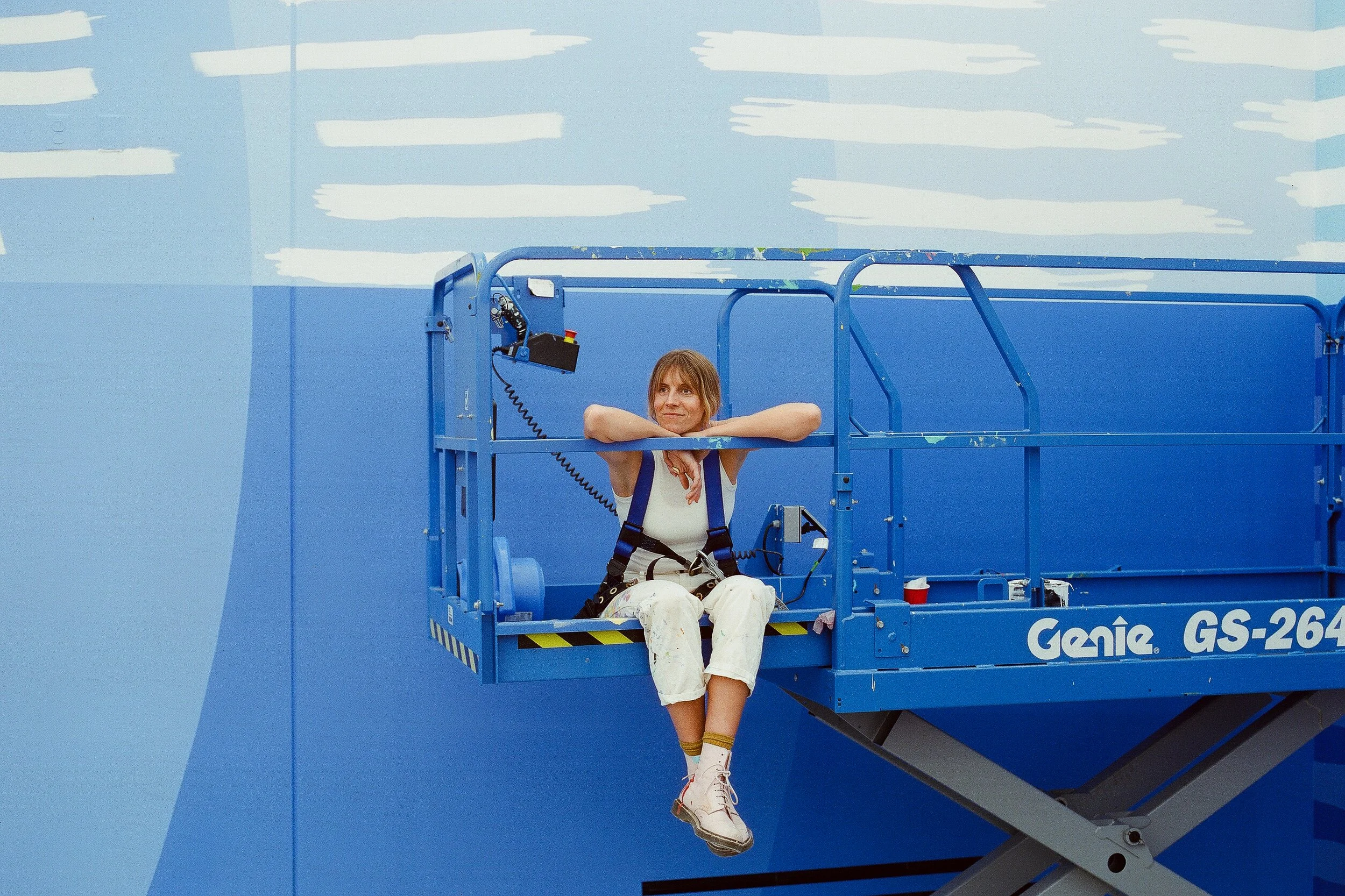
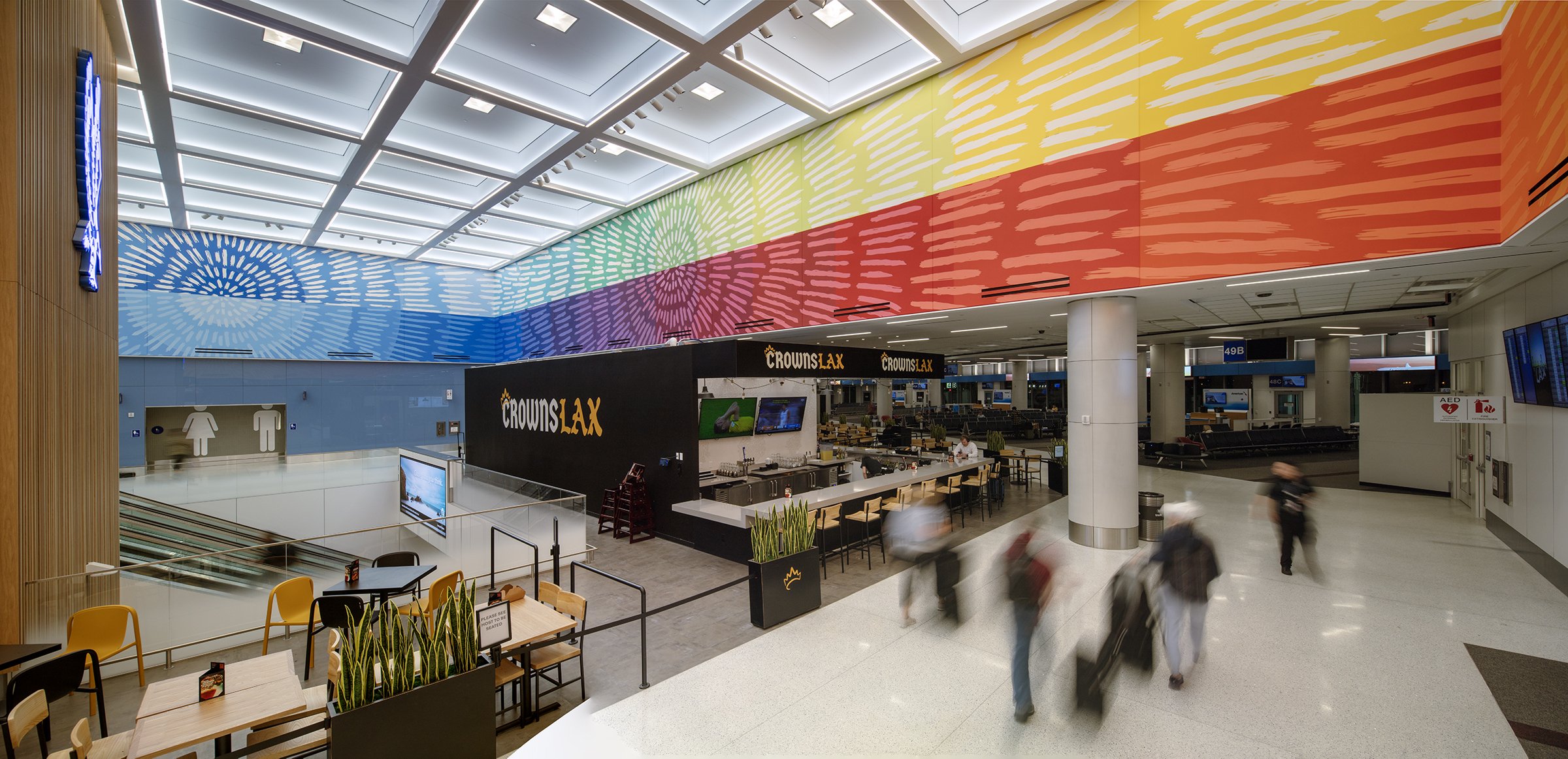
In 2024, we were commissioned to design and install a connected three-wall mural in Terminal 4 at Los Angeles International Airport. The site is located at the end of the concourse and is the first completed portion of a larger ongoing renovation in T4.
This area of the terminal serves gates for American Airlines. It is a steady flow of arrivals and departures, and in its original, vast whiteness, we saw an opportunity to saturate the space with color. We hoped the work might interrupt the tunnel vision of travel and invite a small moment of presence, wonder, and ‘wow’.
Empowerment + Collaboration: A Dream Creative Partnership
From the beginning, the LAWA Art Program team allowed me to approach this installation as an extension of my studio practice. They created an environment of trust that encouraged me to push into my fullest expression, a step beyond how I typically approach murals for clients. Because of that support, I felt comfortable bringing them into the process early and often. I shared many, many drafts of the design, asked for their reactions, and considered their insights on how each option might impact a traveler’s experience of the space.
That partnership shaped the final outcome of the piece. Their input helped us understand just how much color the space could hold (a rare and mighty container) which ultimately emboldened us to work with a much more vibrant and extensive palette than many of our past pieces. Truly where else can nearly 3,400 square feet of full-chroma color explode across three walls without overwhelming the space?
We’re incredibly grateful for the opportunity to design for such an adaptable canvas.
Design & Concept Development
This installation grows out of a studio series centered on life’s repeating cycles. I notice how easily the pace of modern life pulls us into a muted, operational mode where the deeper parts of living become hard to feel. This piece is about the moments that interrupt that state and wake us up. Moments of awe, wonder, magic, love, gratitude, inspiration, and connection that remind us what it feels like to be fully alive.
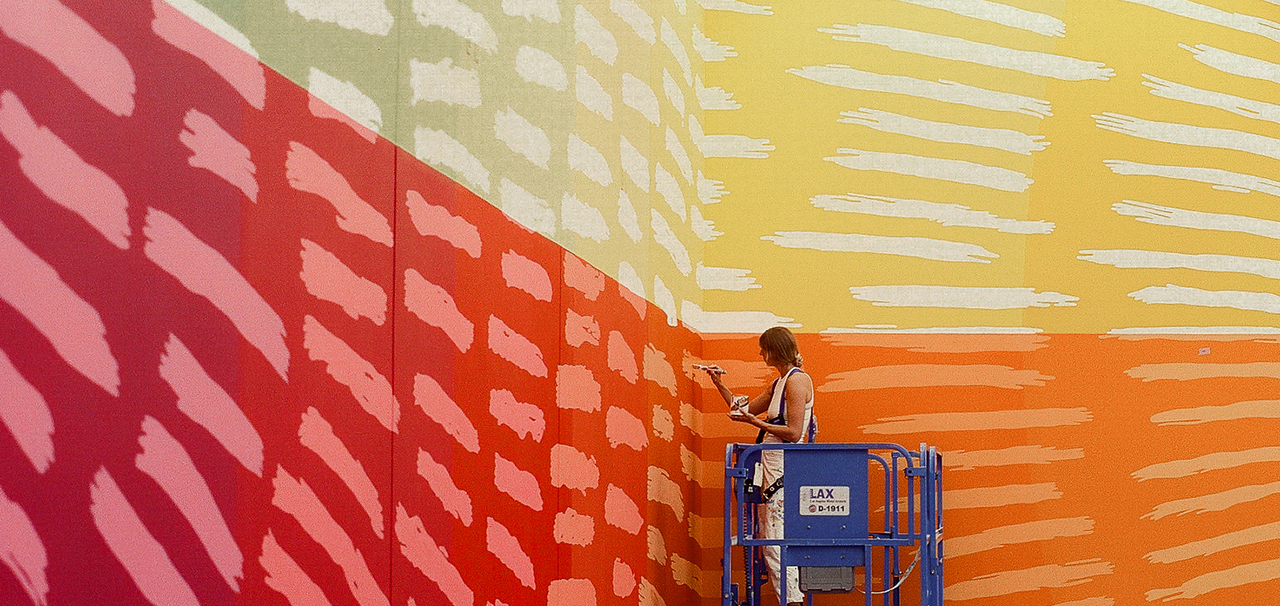
Airports amplify that sense of motion and routine, so I wanted the piece to be bold enough to break through the autopilot state that comes with travel. The three connected walls carry this idea through color, moving from warm hues in the west to cool tones in the east, with the south wall acting as a chromatic bridge between them.
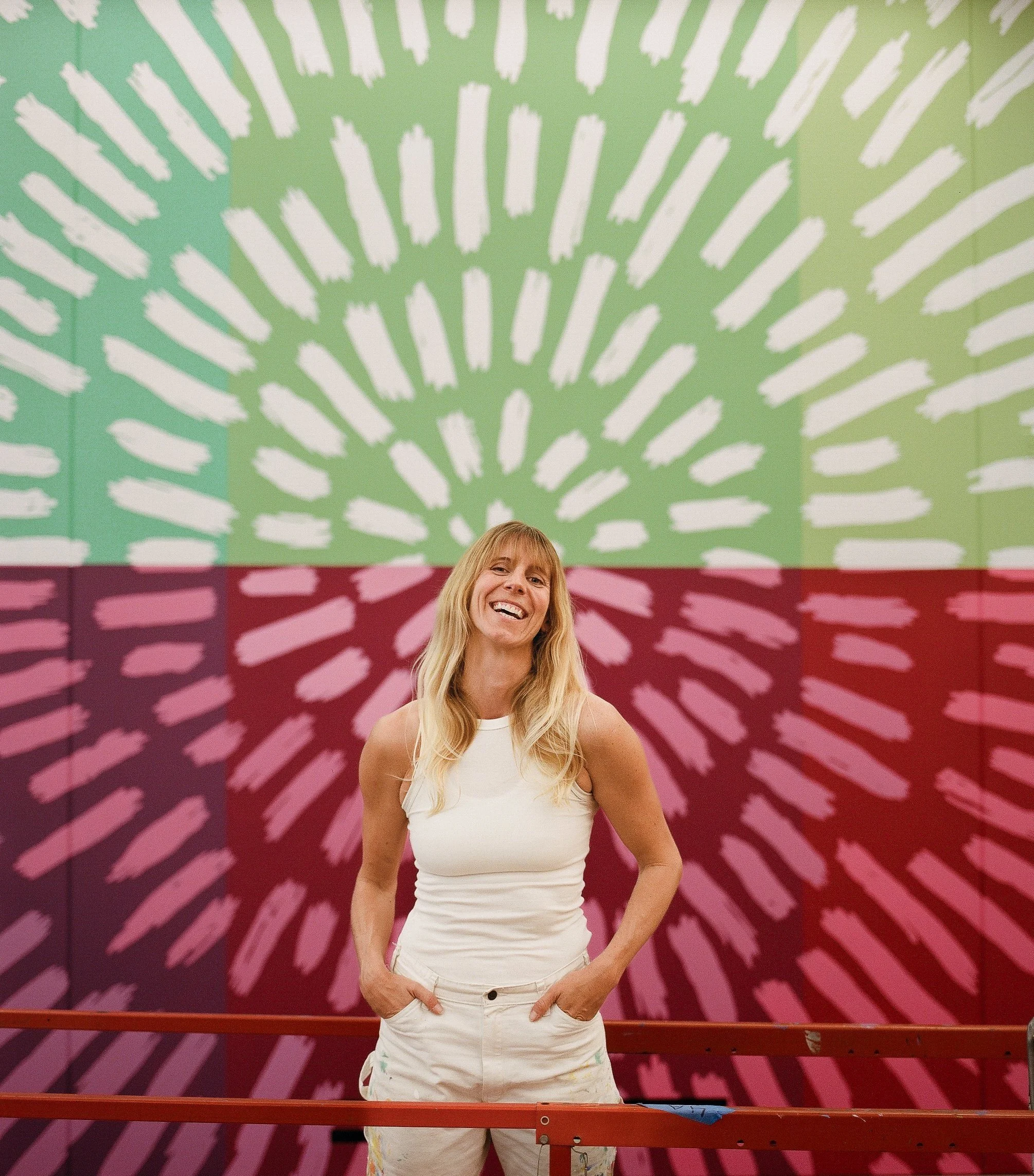
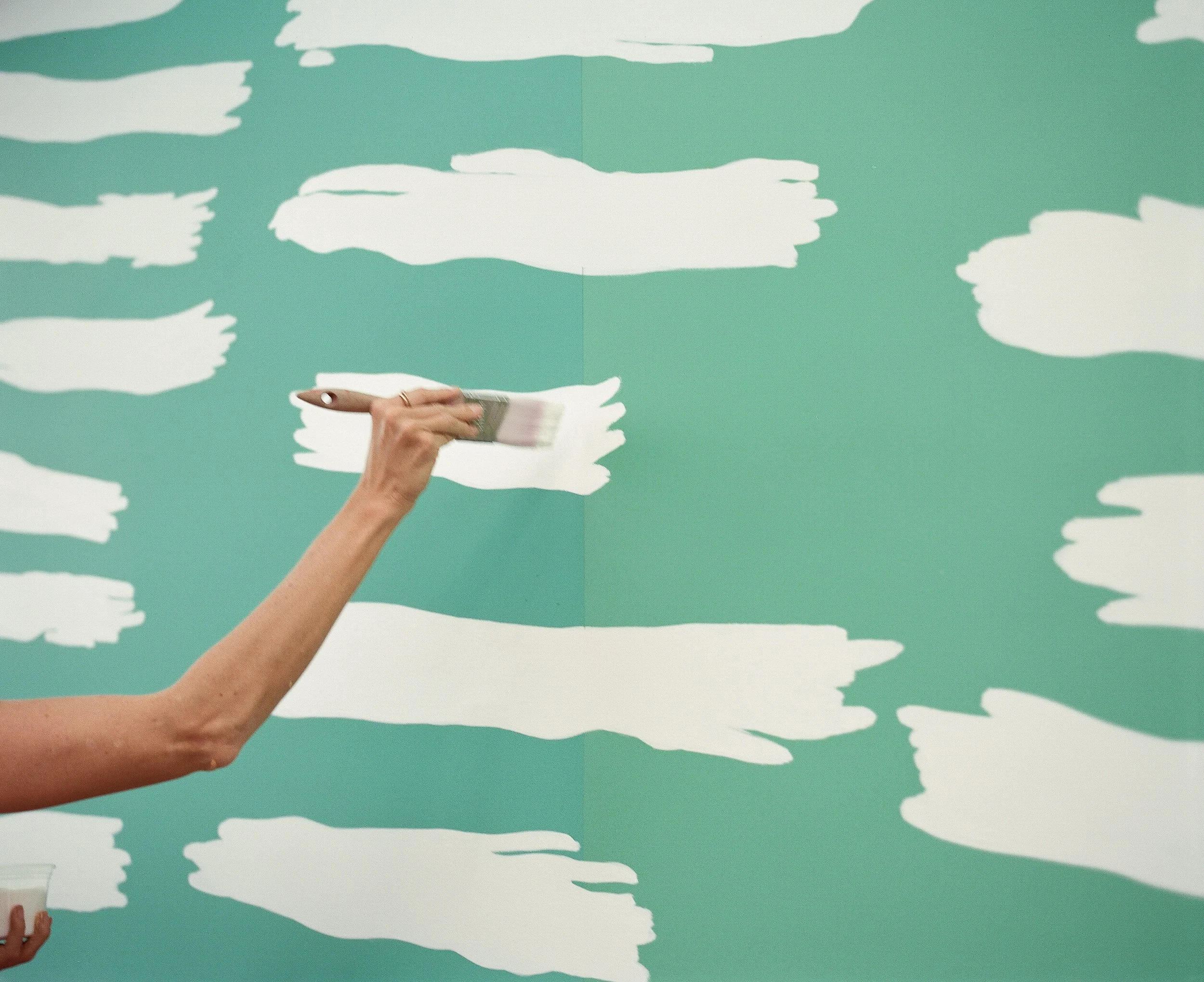
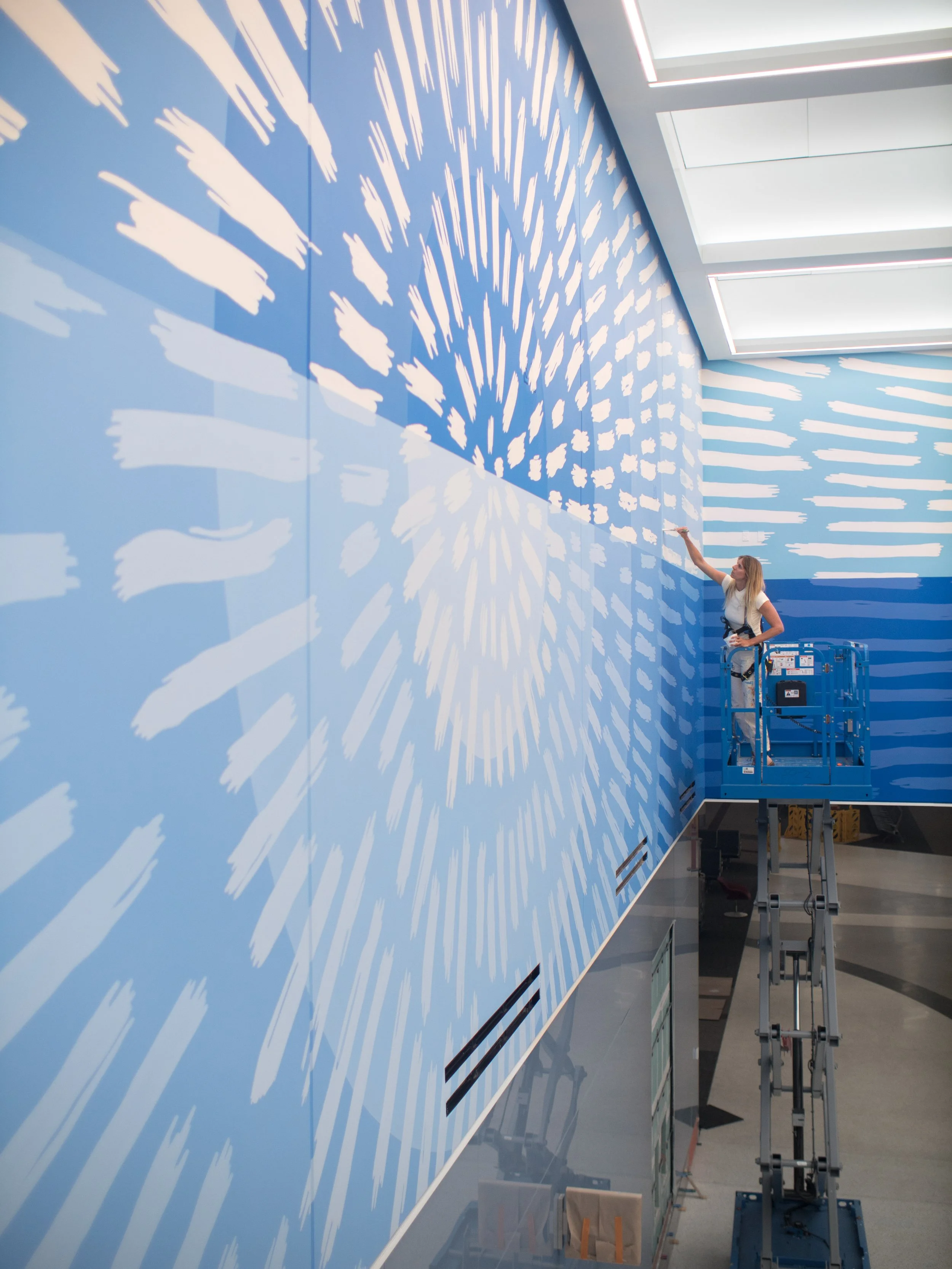
Each wall features enlarged brushstrokes that radiate outward from its center, highlighting a palette shift along a central horizon line. The strokes above this line appear in clean white, while the strokes below shift into softened variations of the background colors to create a transparent, layered effect. The composition is simple at first glance, yet it is designed to reward slow looking.
Process
Behind The Scenes
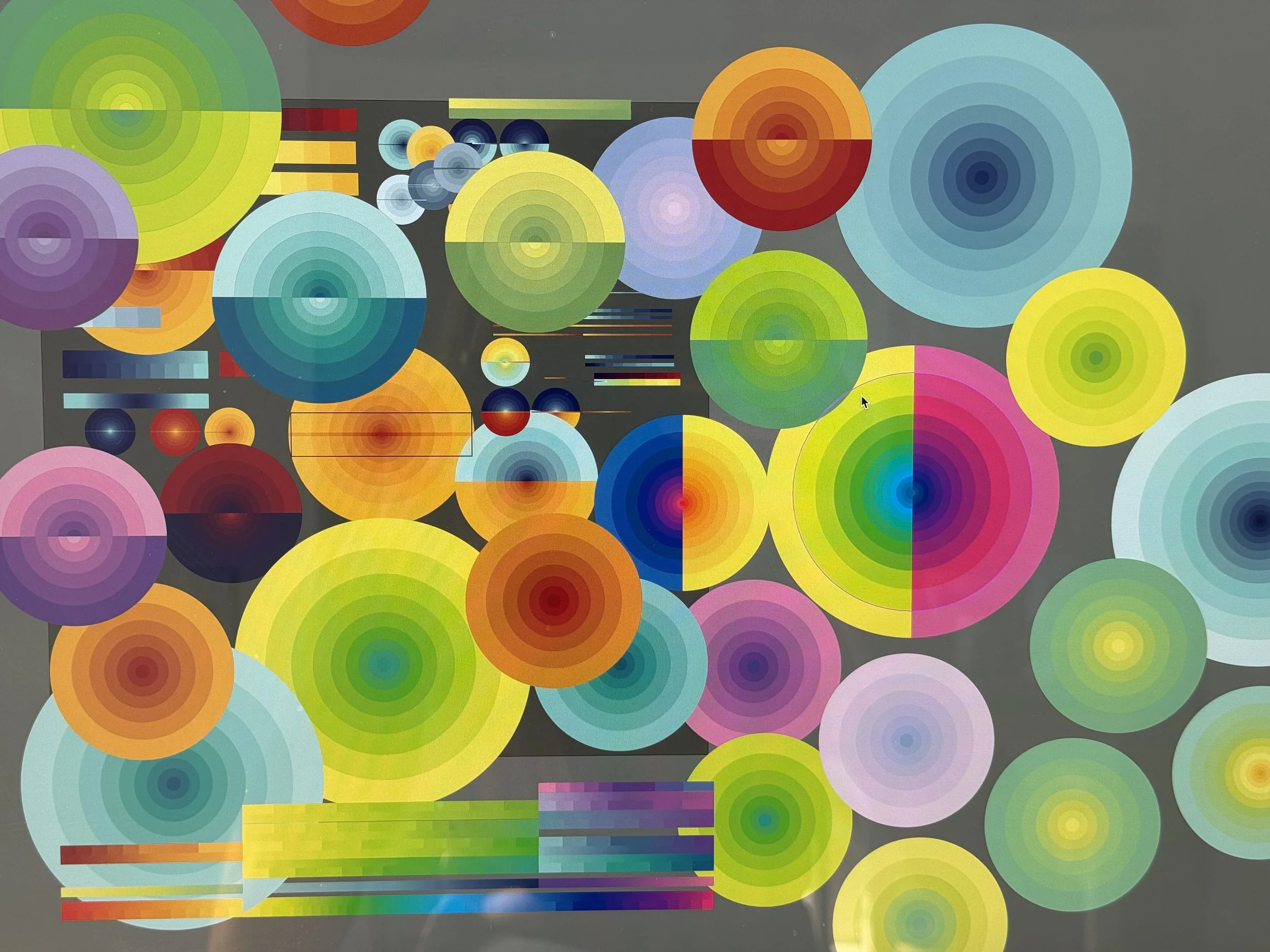
Here’s a screenshot of my monitor during the design process. At this stage, I was experimenting with how the gradients would split and interact with each other.
Palette & Swatch Selection
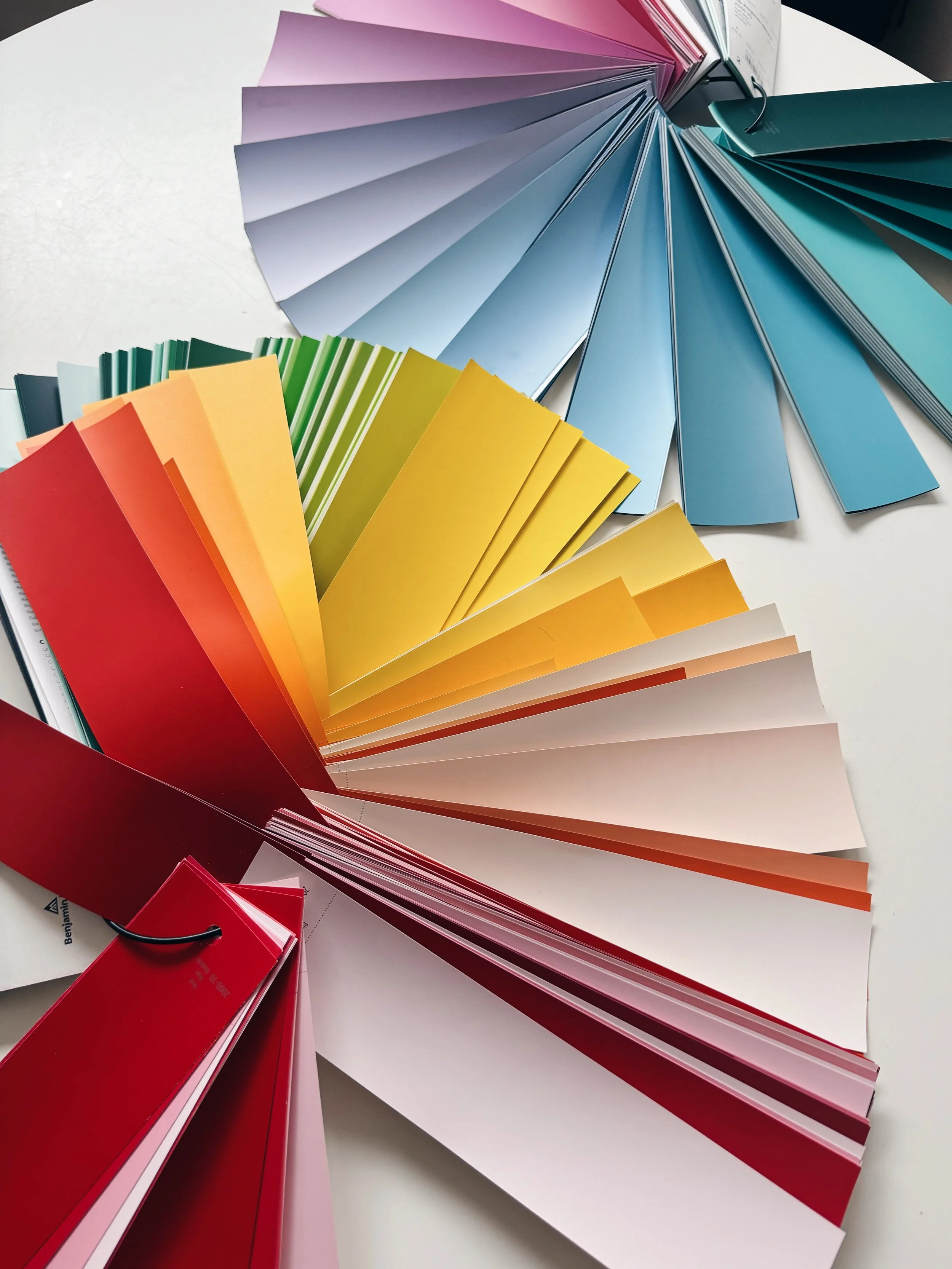
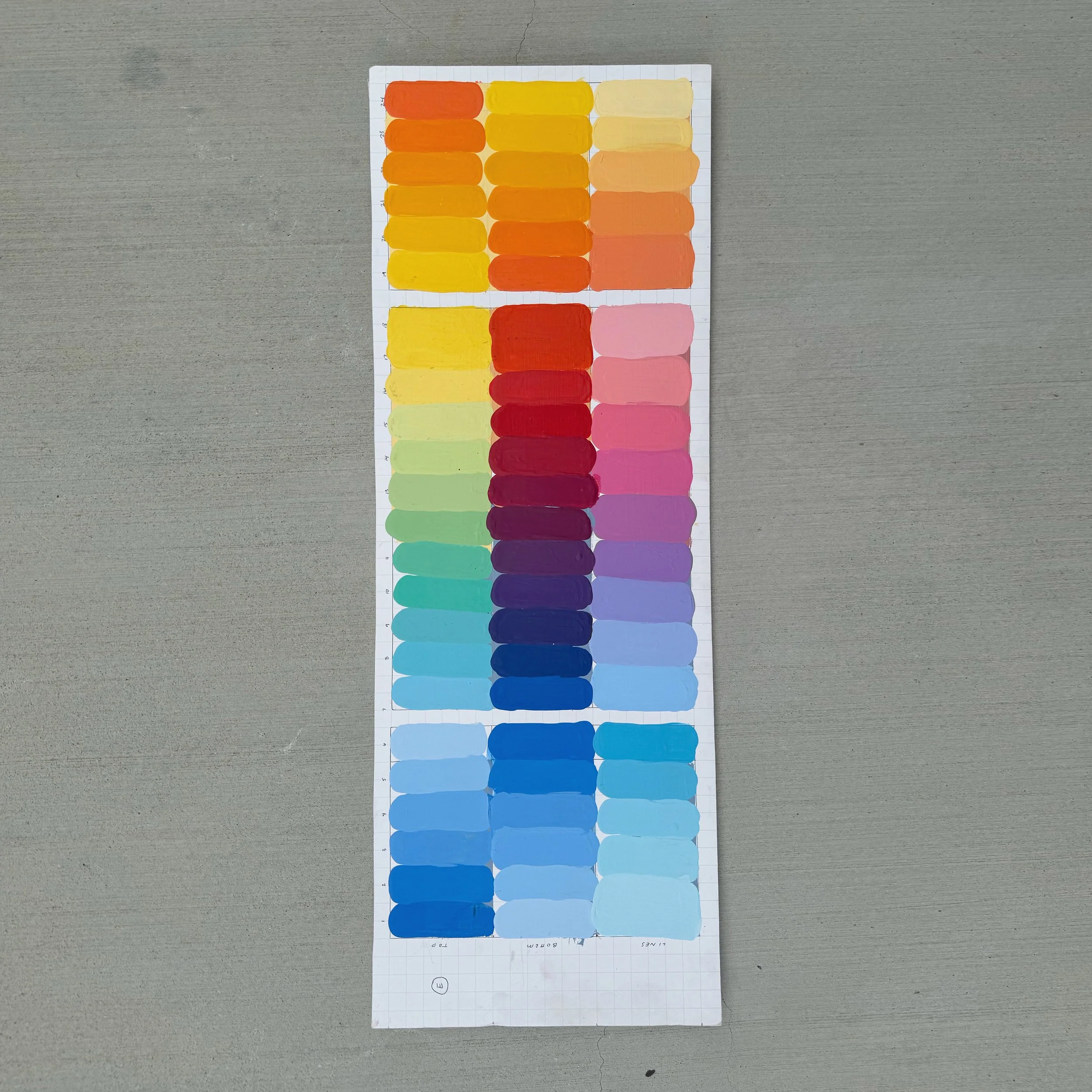
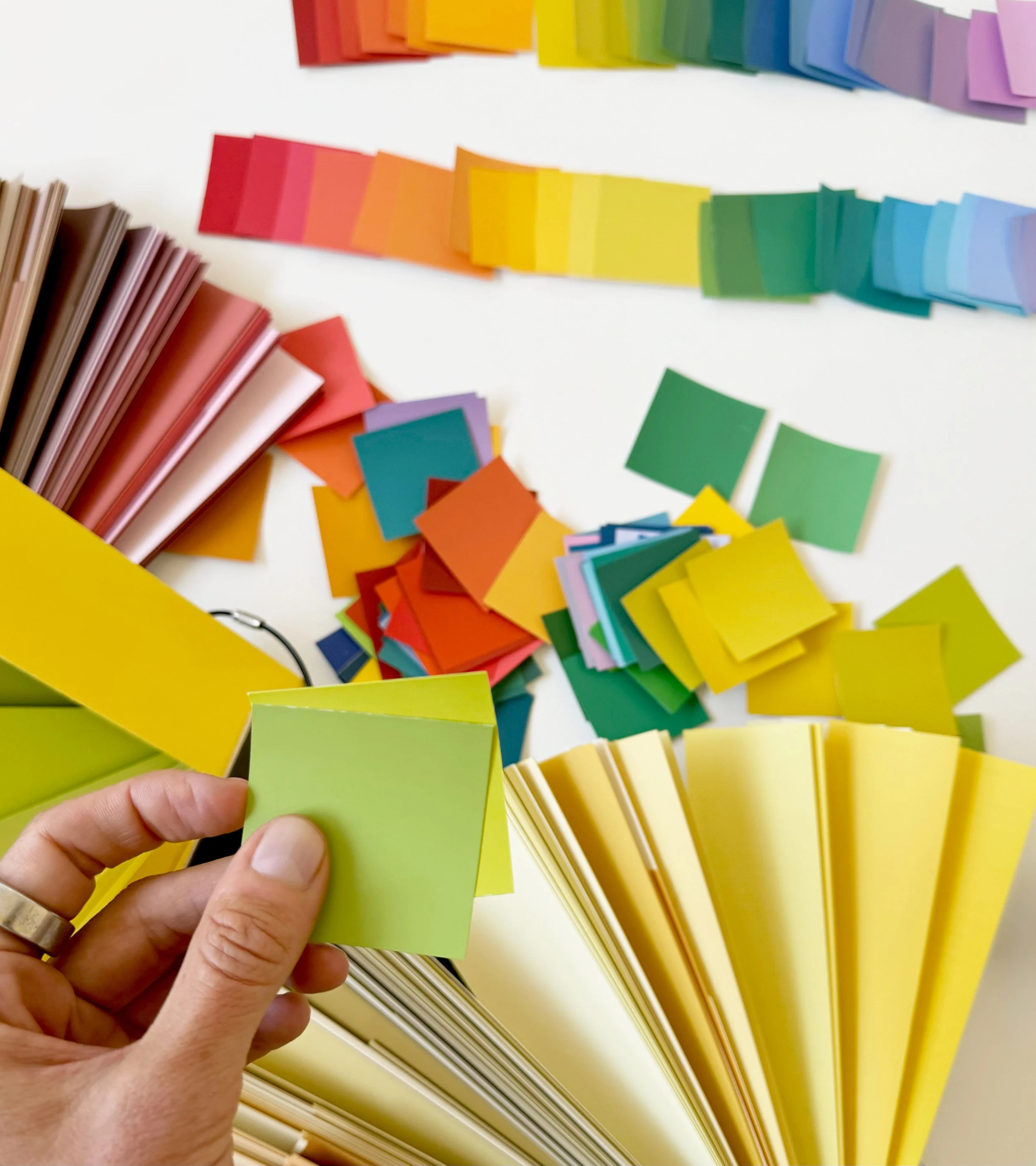
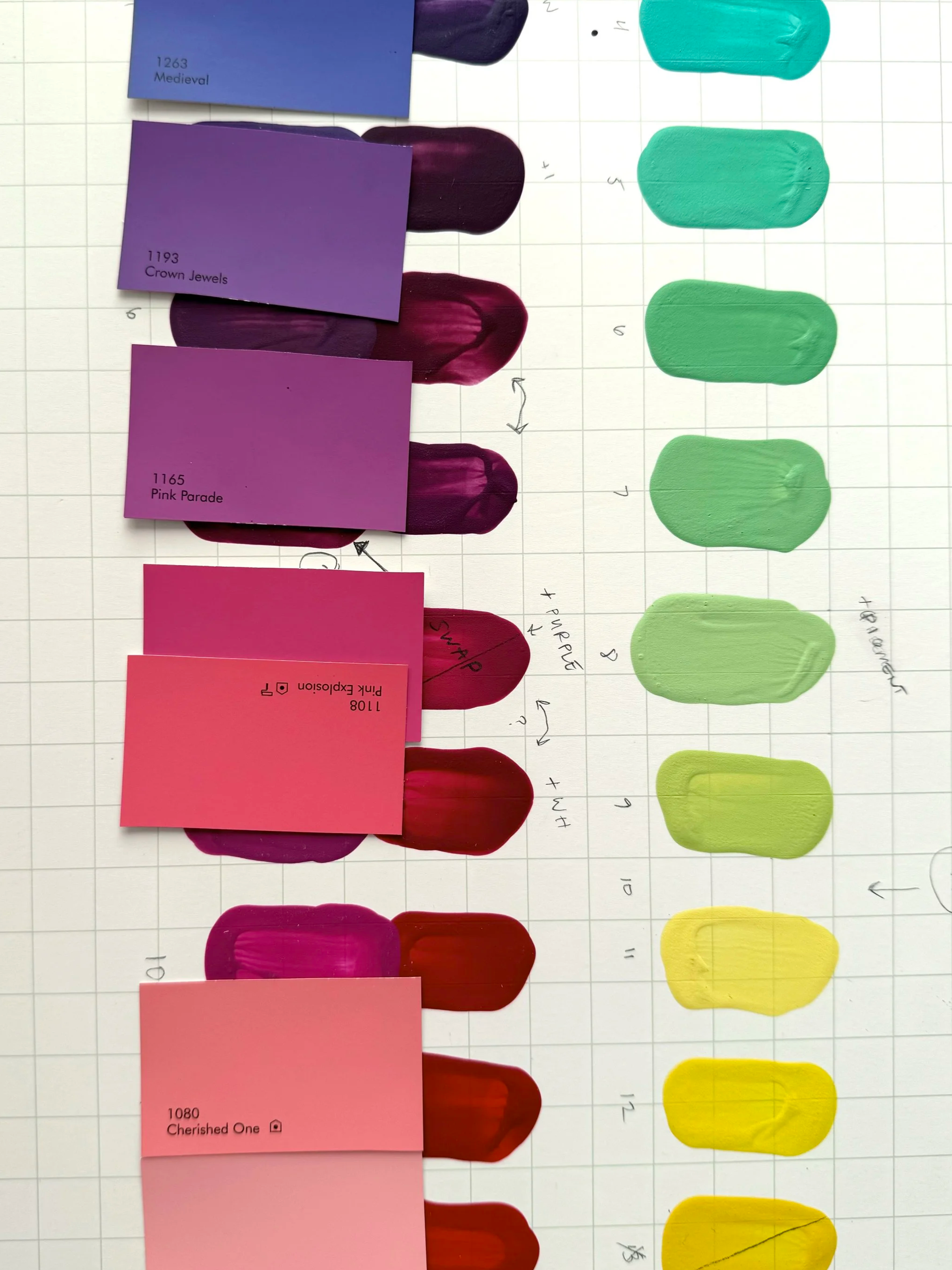
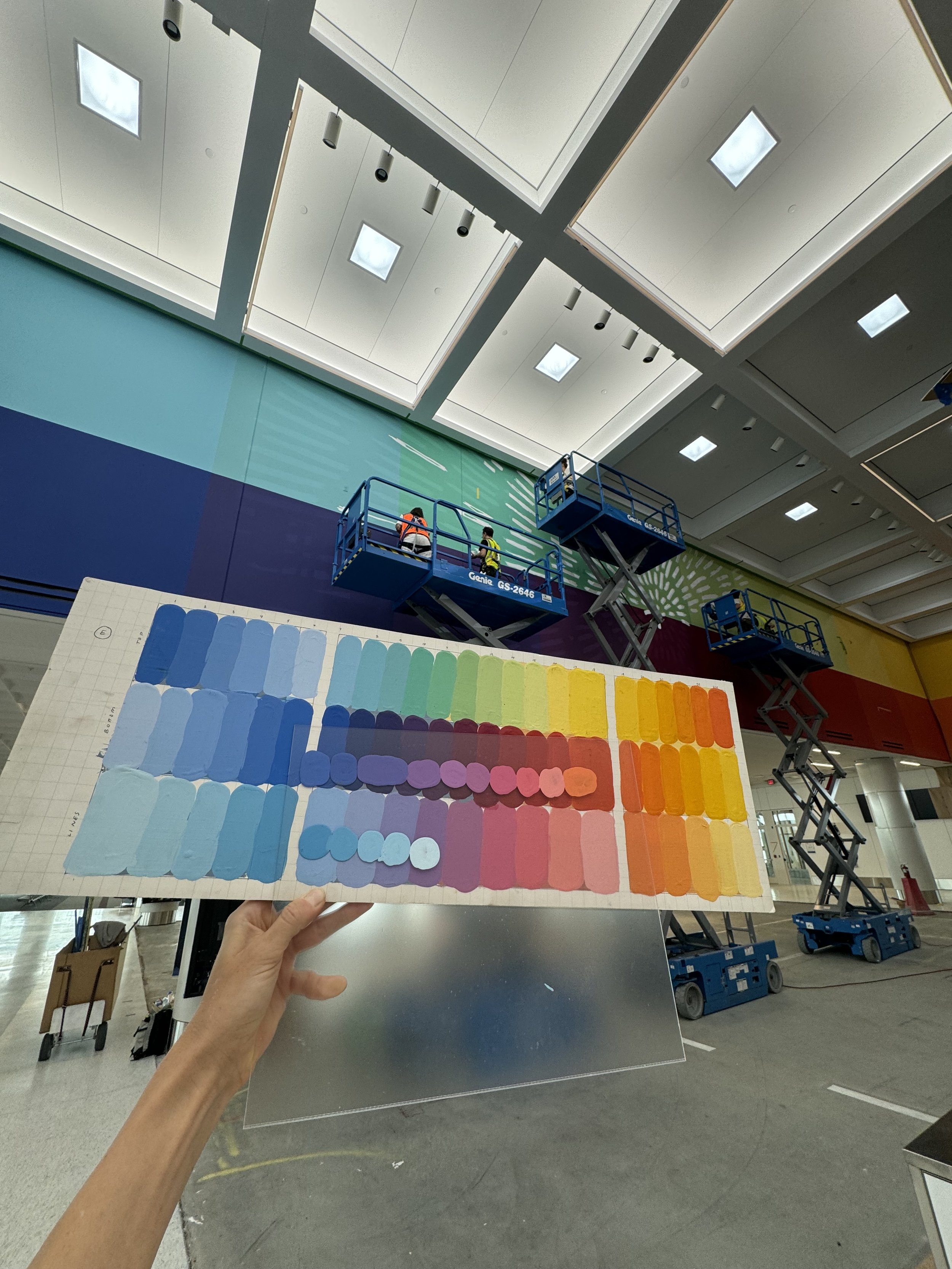
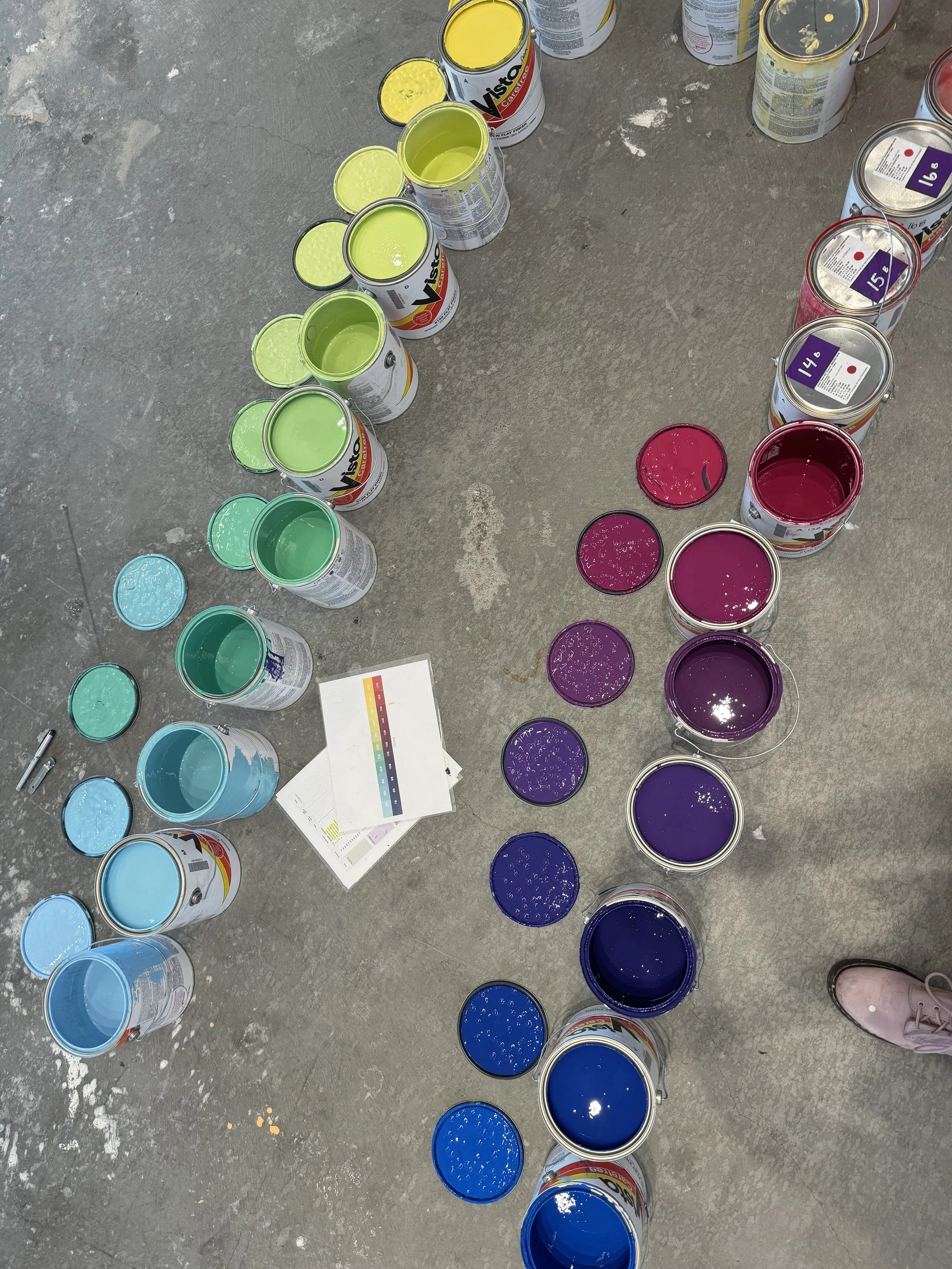
Behind the clarity of the final composition was a very detailed color development process. I explored hundreds of color combinations and compositional variations before beginning the work of translating digital gradients into physical paint. This part of the process became its own craft. I spent more than forty hours in the paint store mixing and modifying formulas, sometimes adjusting a single drop of pigment to achieve the right transition.
The gradient required really precise calibration. Changing one color often meant adjusting twenty more on either side to maintain balance and harmony. Every swatch had to support the next to create a sense of calm, continuity, and emotional progression across all three walls. It was painstaking and technical, but essential to achieving the final effect.
The Process
Behind The Scenes
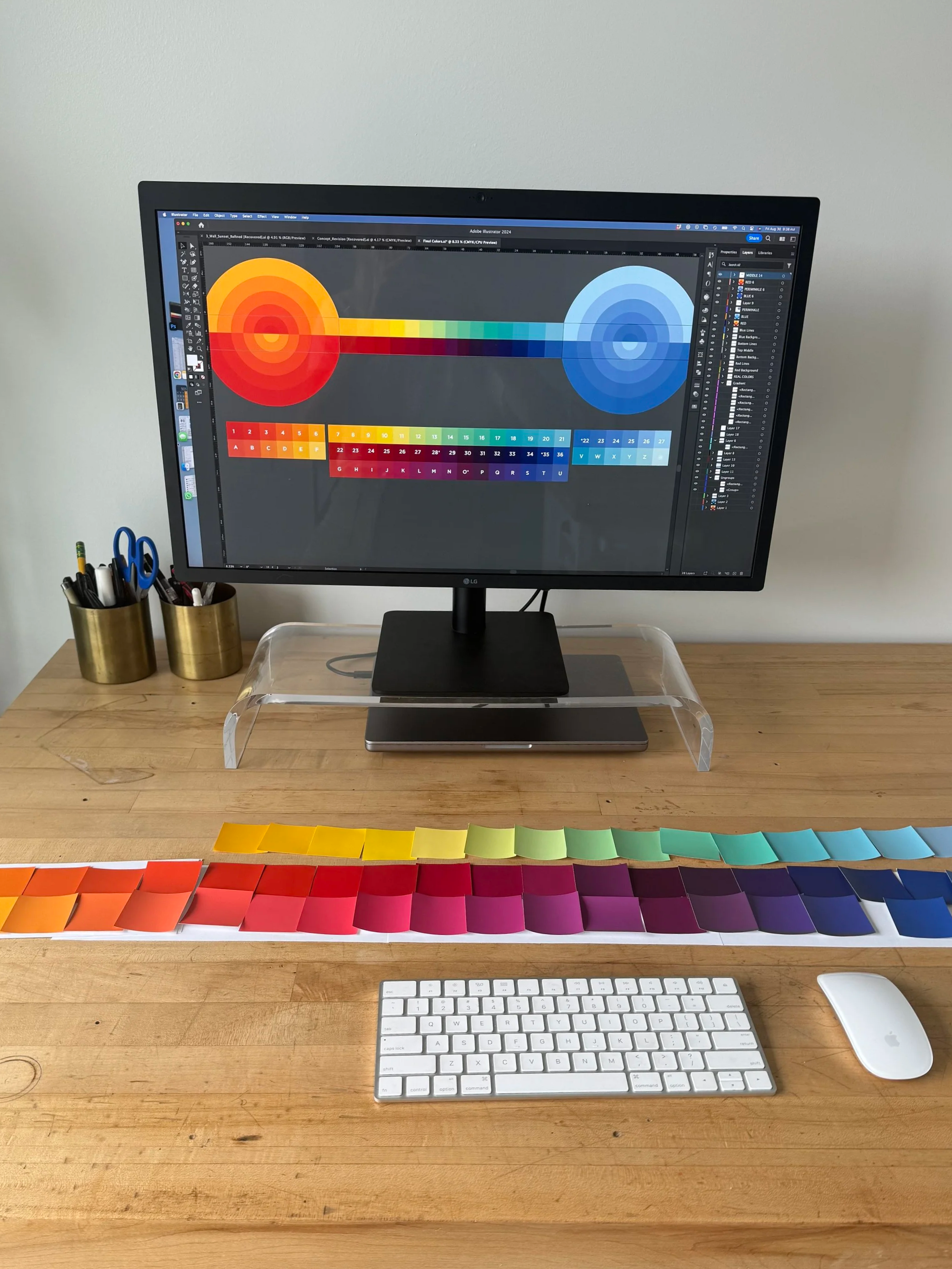
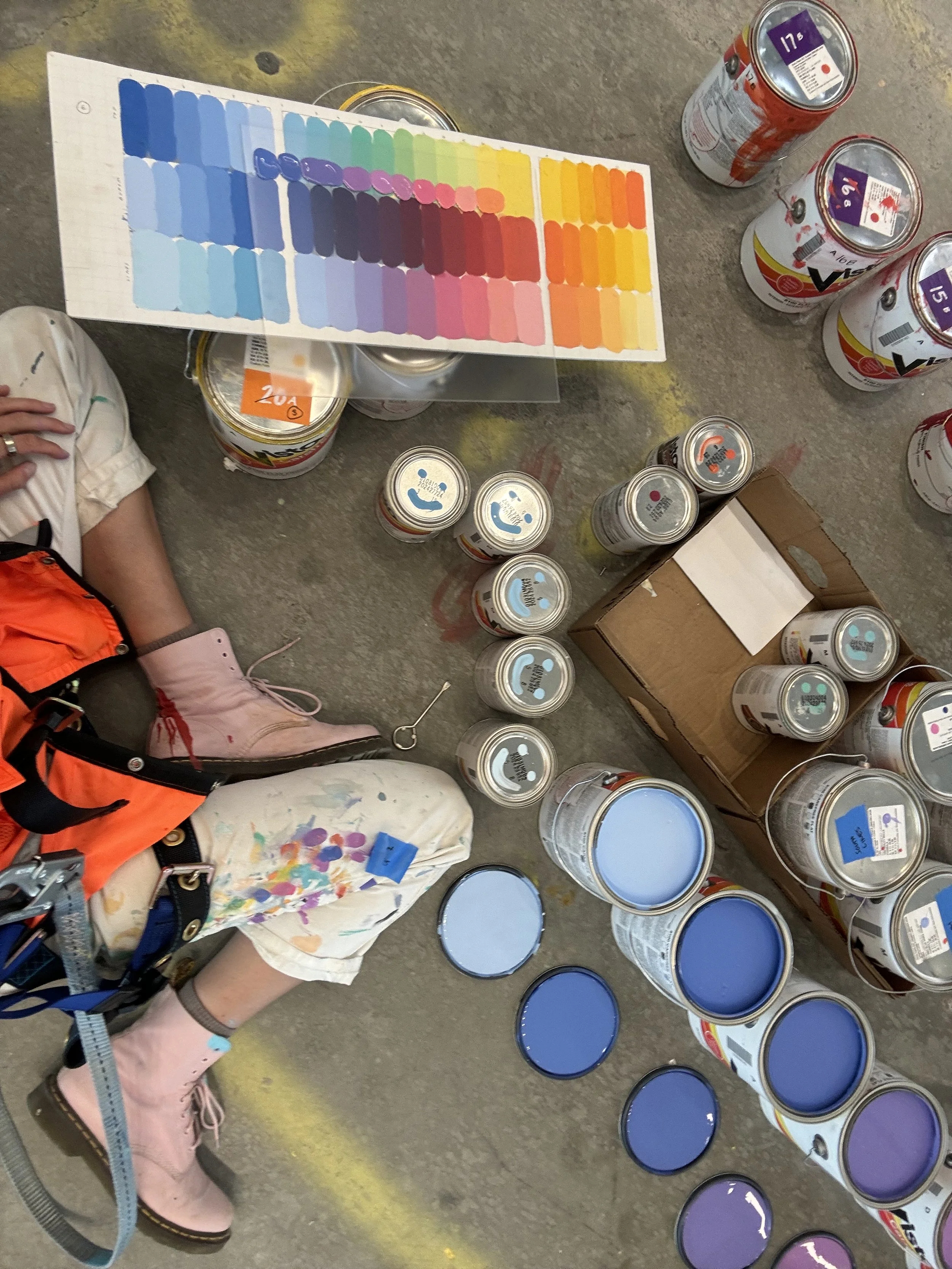
Here you see the design locked in and final, along with my selected swatches. (After many, many iterations and experiments.)
Planning & Pre-Production:
The Work Behind The Work
Large-scale installation work requires far more than strong design. It requires designing a system that can actualize the vision.
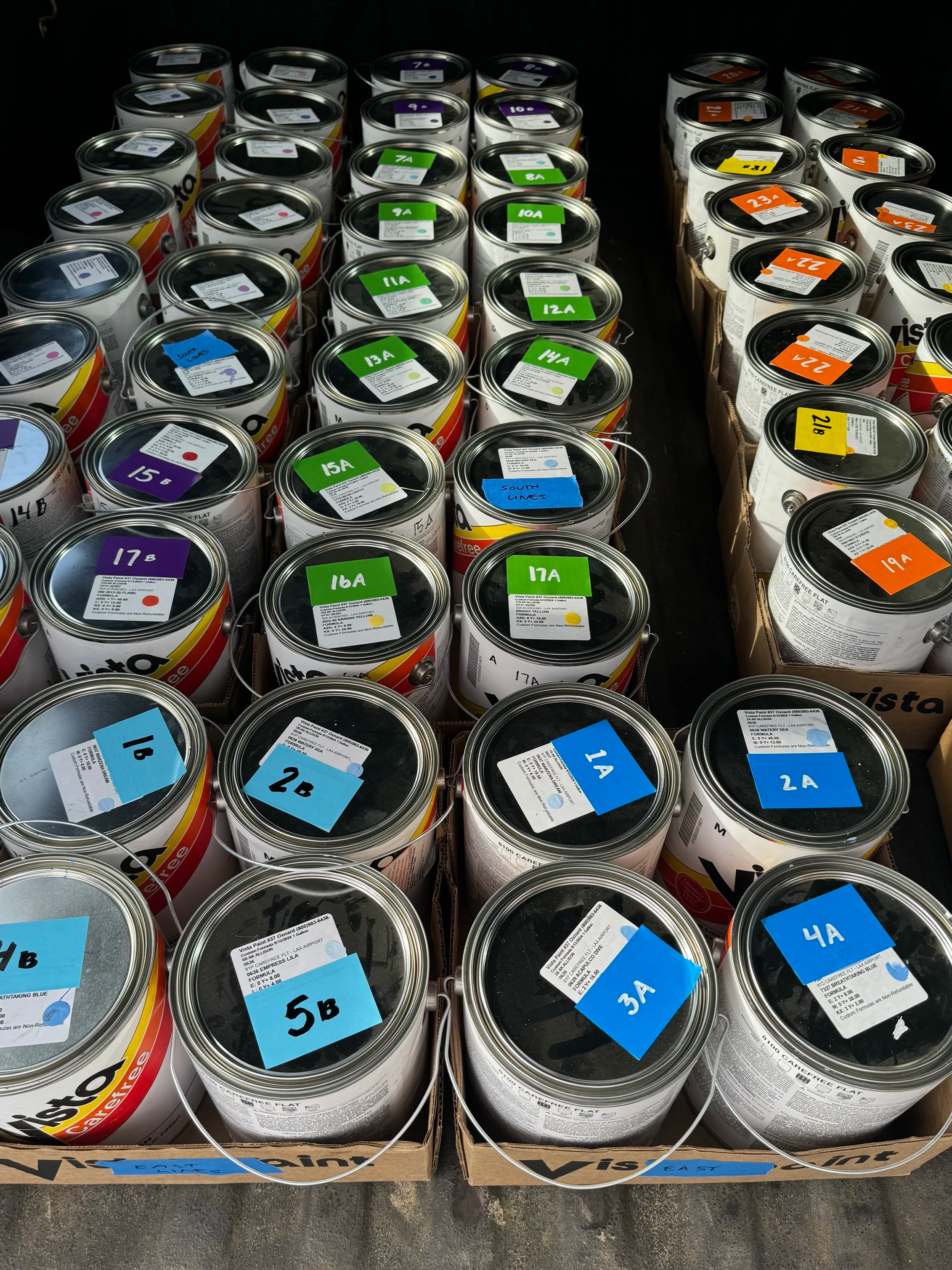
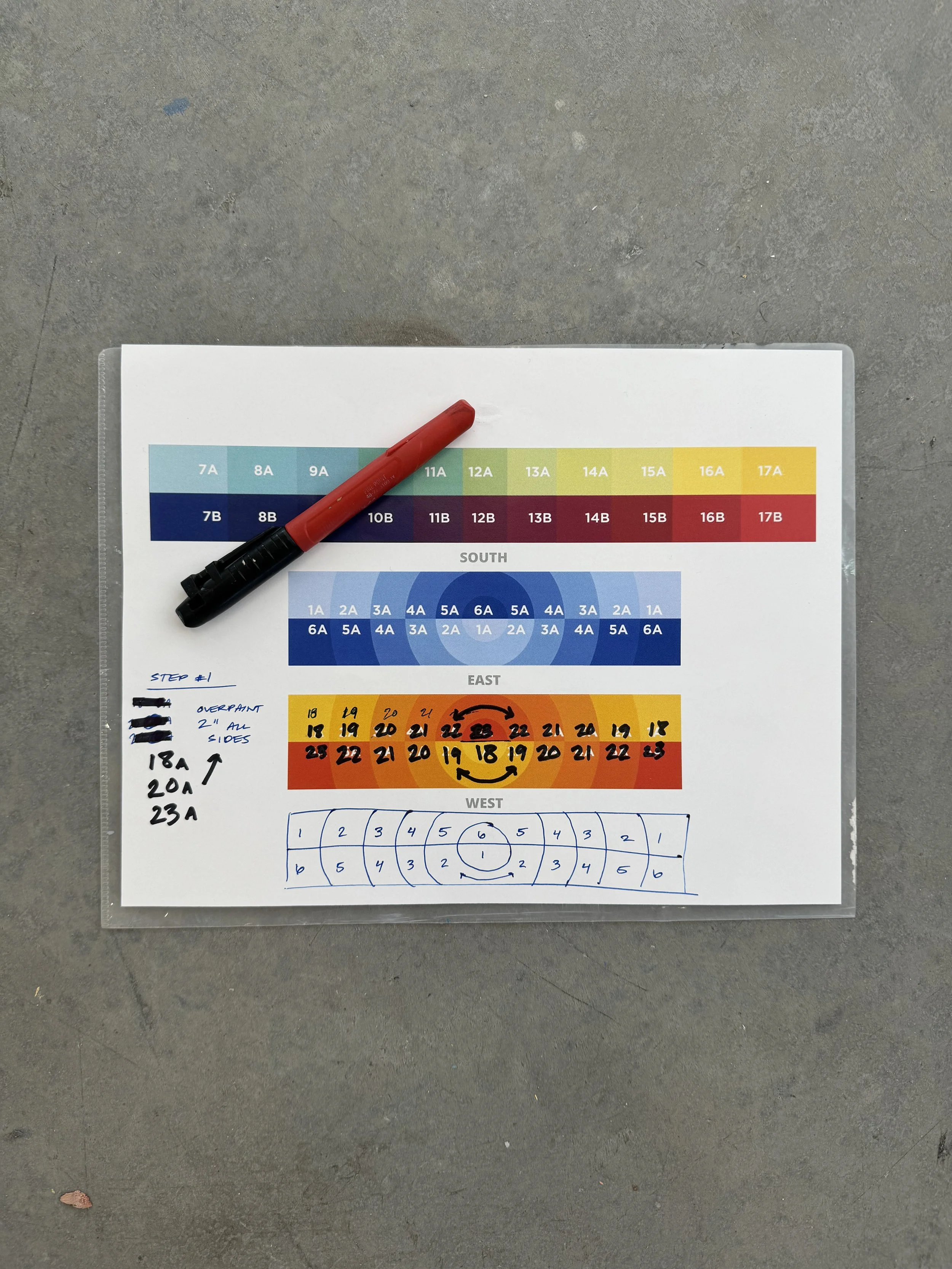
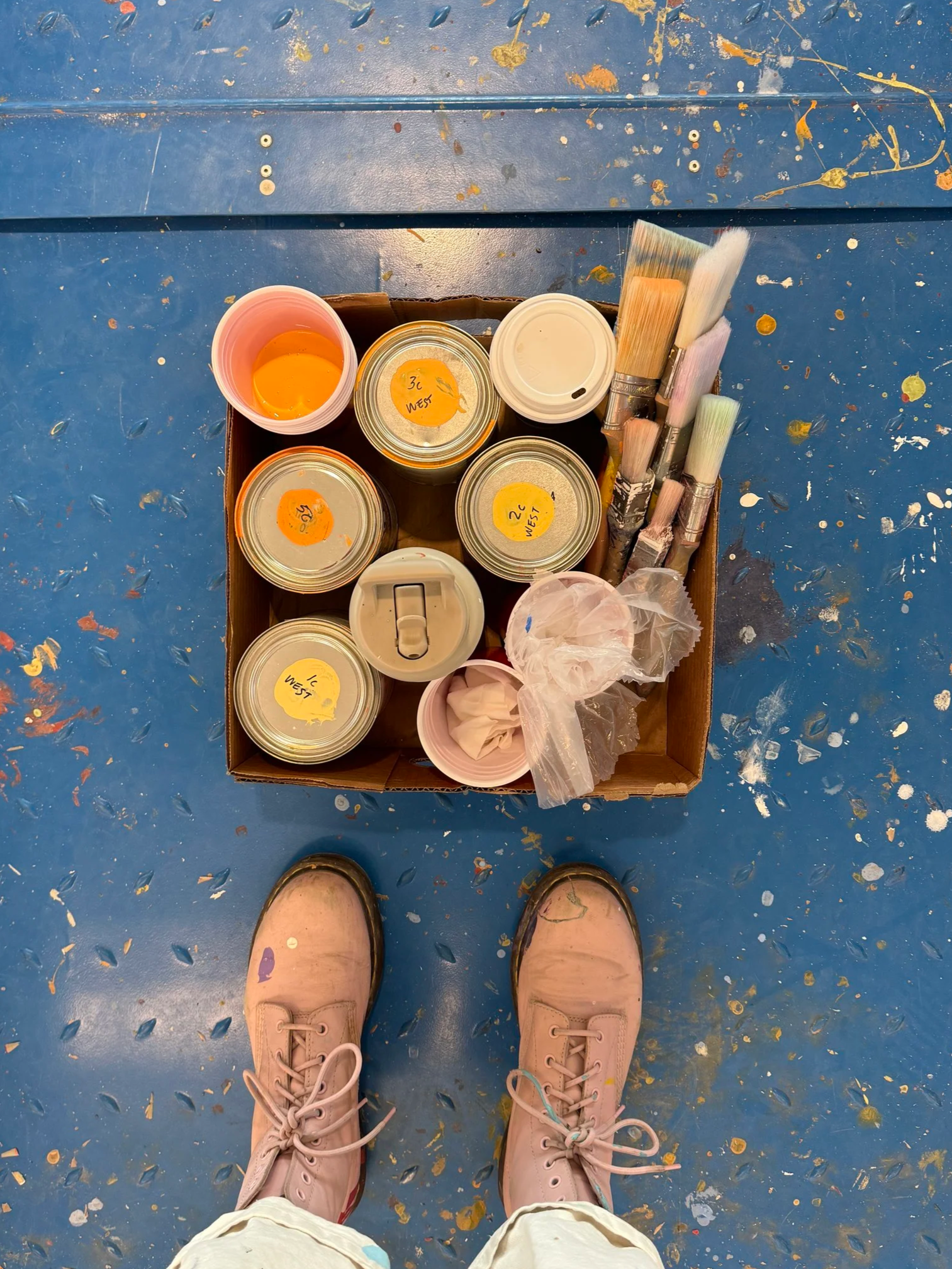
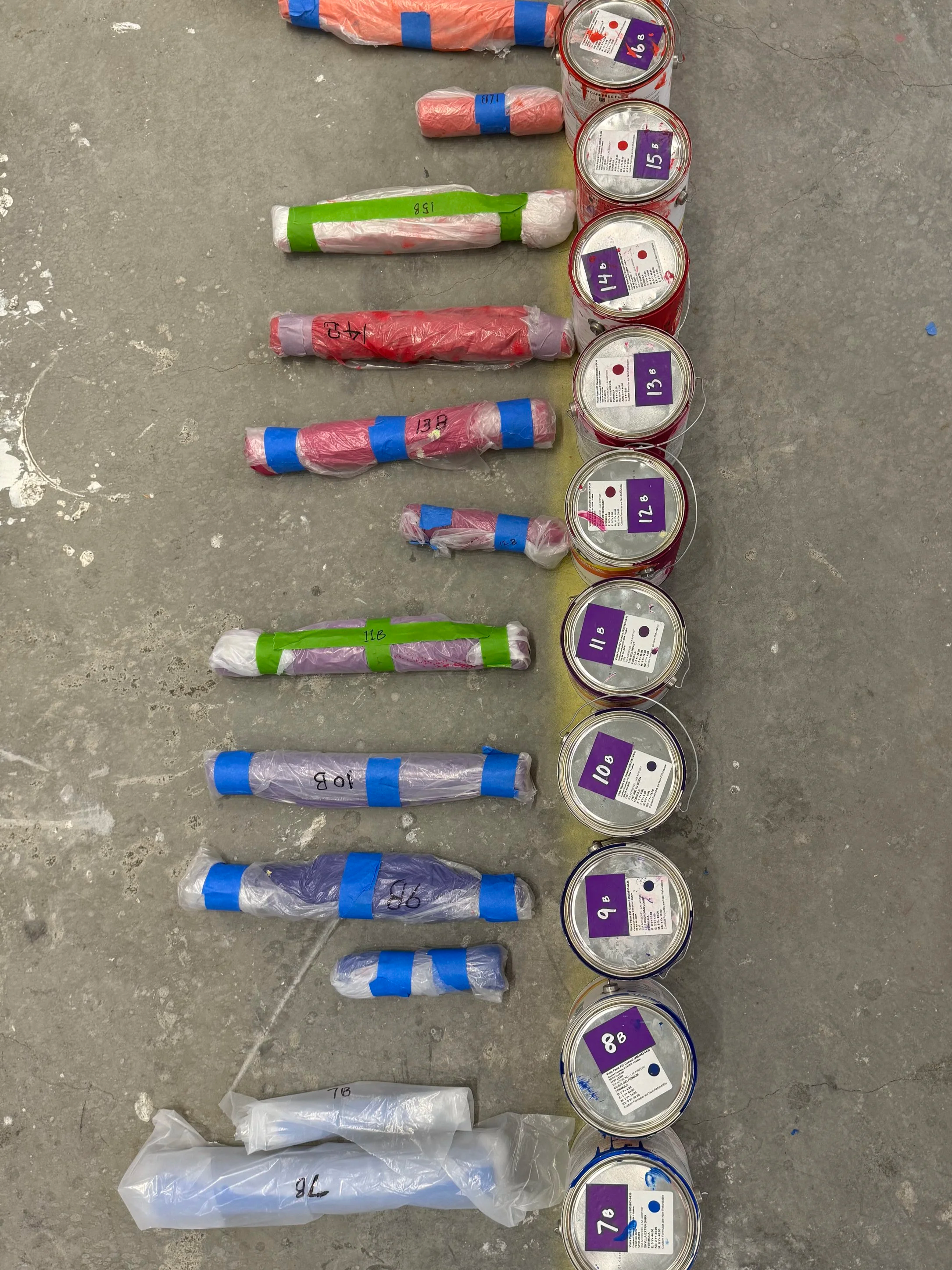
Every can was labeled. Every segment on the wall had its own code-number. The entire gradient was mapped and checked repeatedly. Miraculously, there was only one significant color error throughout the entire process - something we’re incredibly proud of.
Pre-production: 250 hours+
• mockups and refinements
• multiple rounds of color testing
• labeling more than 60 gallons of paint with coded systems
• building detailed installation maps for each wall
• developing day-by-day process guides
• preparing materials for a ten-person team
• creating Gantt charts and manpower plans
The Process
Behind The Scenes
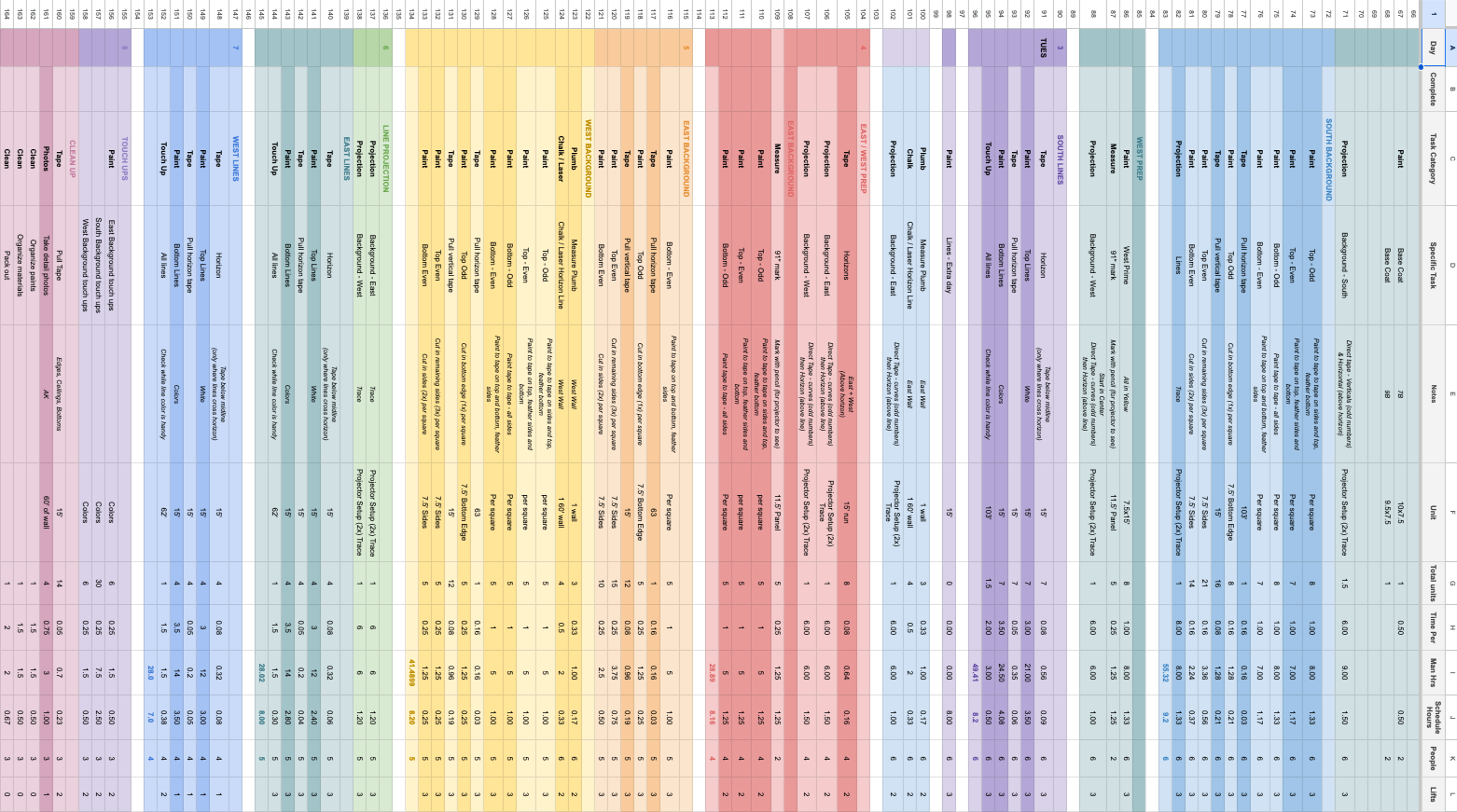
Custom spreadsheets are a huge part of my planning process. Here’s a portion of one of the many sheets I built to keep track of this project’s details.

Adaptation & Coordinating
On A Busy Jobsite
A major part of working in active construction is learning to move with a site that never stays the same. Schedules shift, access changes, and new priorities surface unexpectedly. To stay aligned with the client’s needs, we expanded the team, accelerated sections of the prep work, and did the behind-the-scenes coordination needed to get on site early and meet revised deadlines.
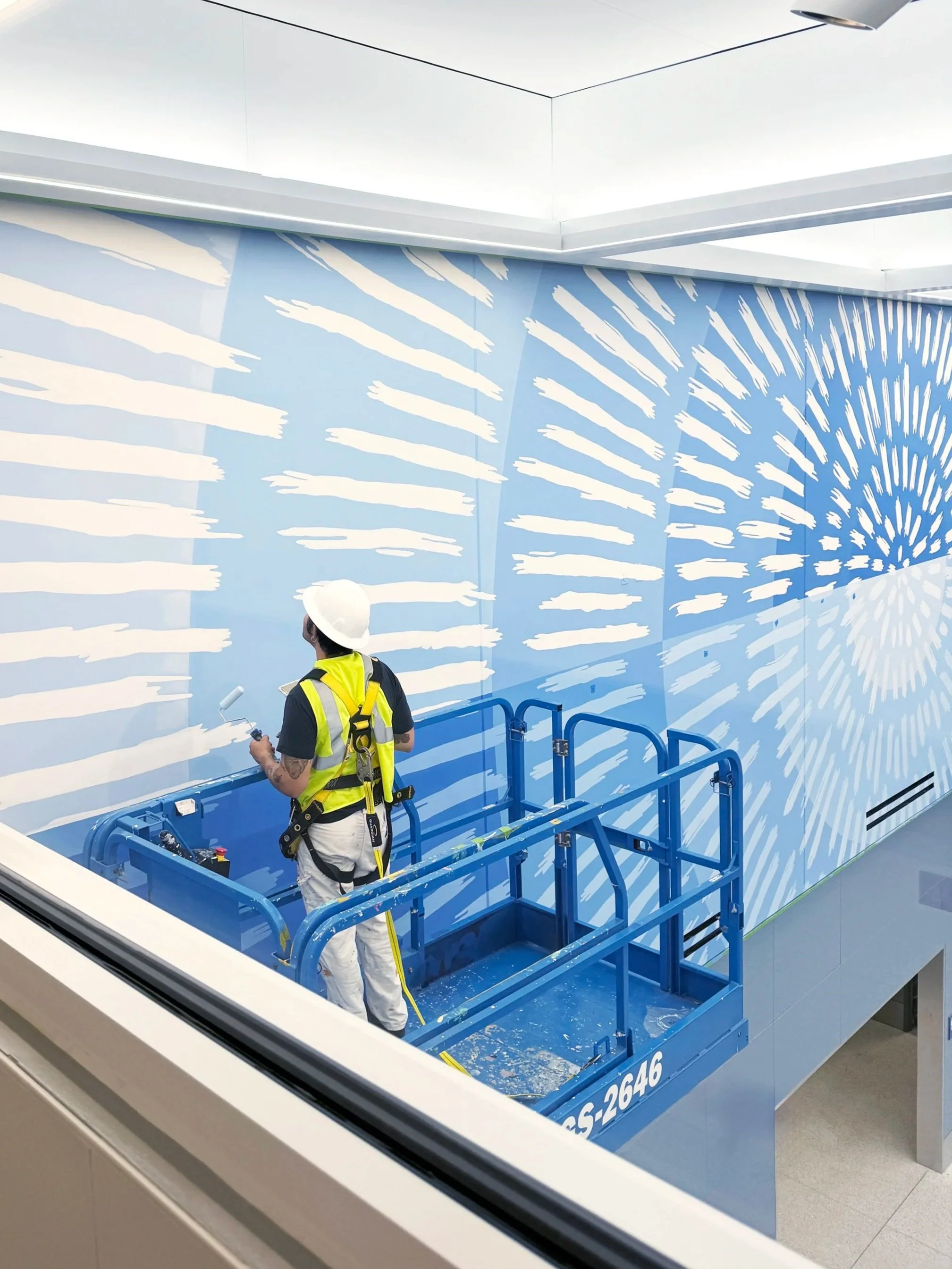
Painting entirely at height added another layer of complexity. Every trip up the lift had to be planned, since small oversights create surprising delays. Staying organized and communicating clearly kept us moving.
Along the way, we developed creative tools to support the process, like a 35-foot hand-built string compass that allowed the team to make progress on multiple walls at once. Adaptability became one of the most important parts of the installation.
The Process
Behind The Scenes
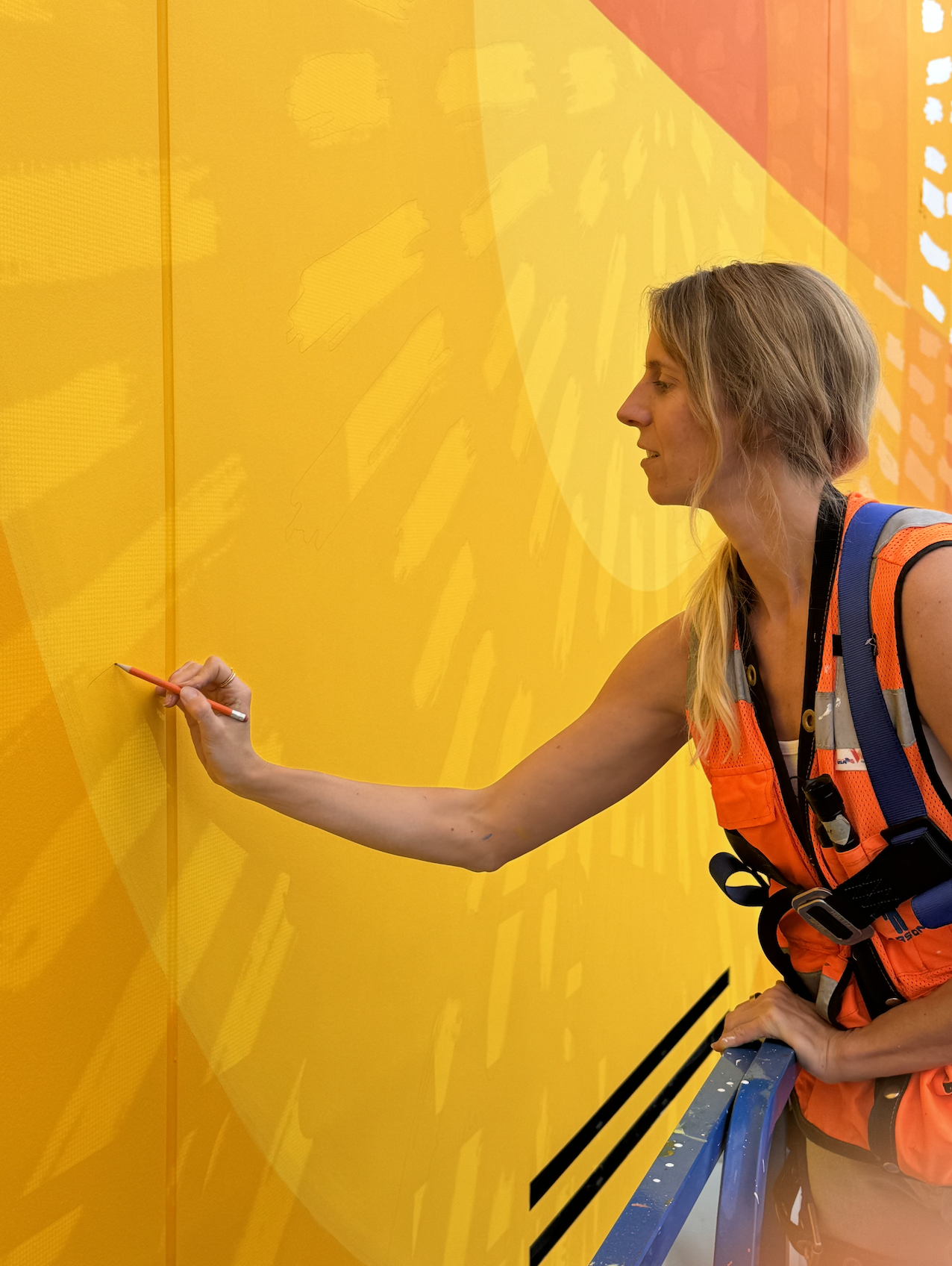
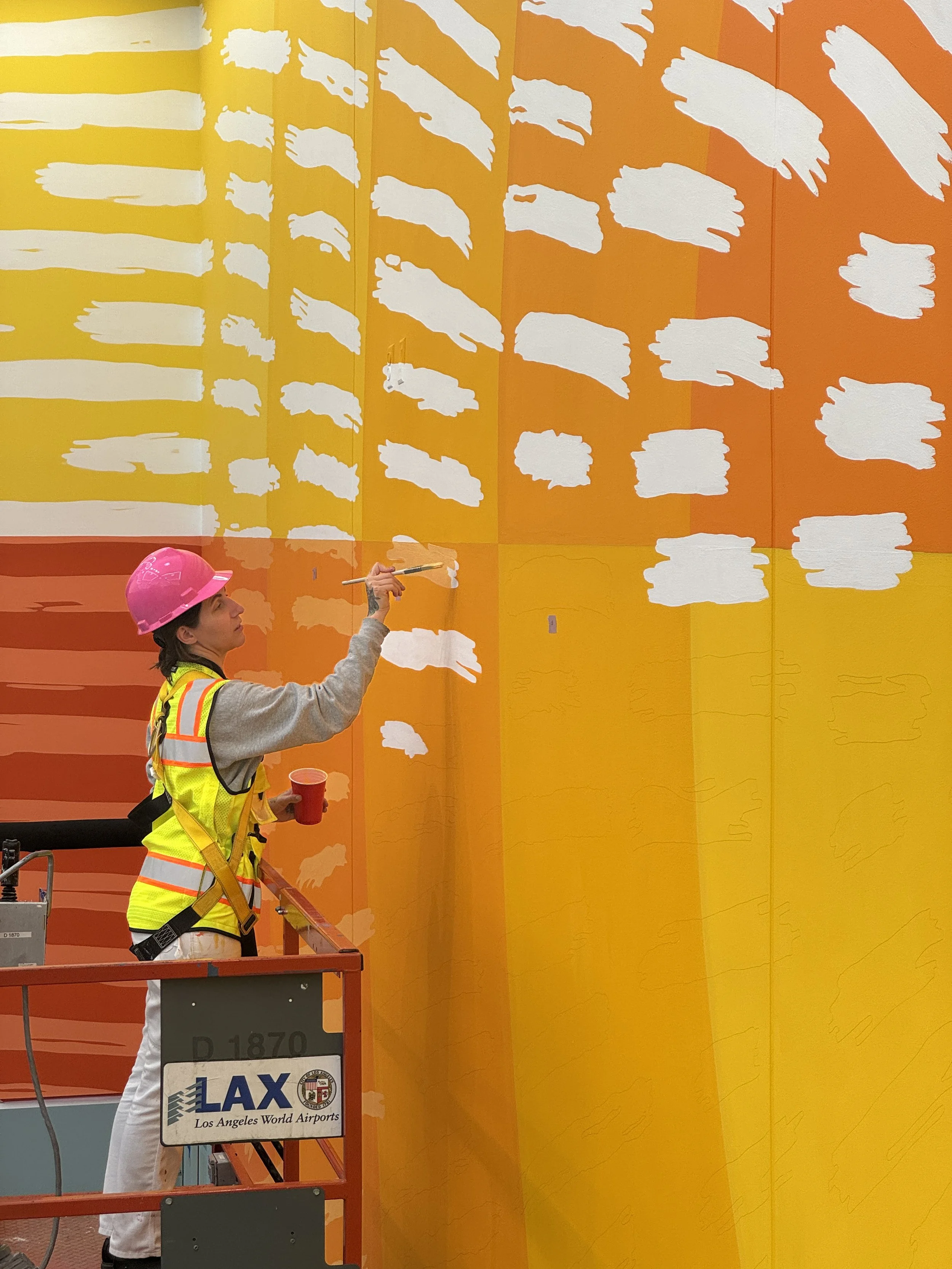
We used a combination of high and low tech to transfer the artwork to the wall. Here I am using a high-lumen projector, capable of functioning in bright daylight. But we also used a hand-made string compass (30 feet long) to trace the circles in the background.
It Takes A Village:
Managing a 10 Person Crew
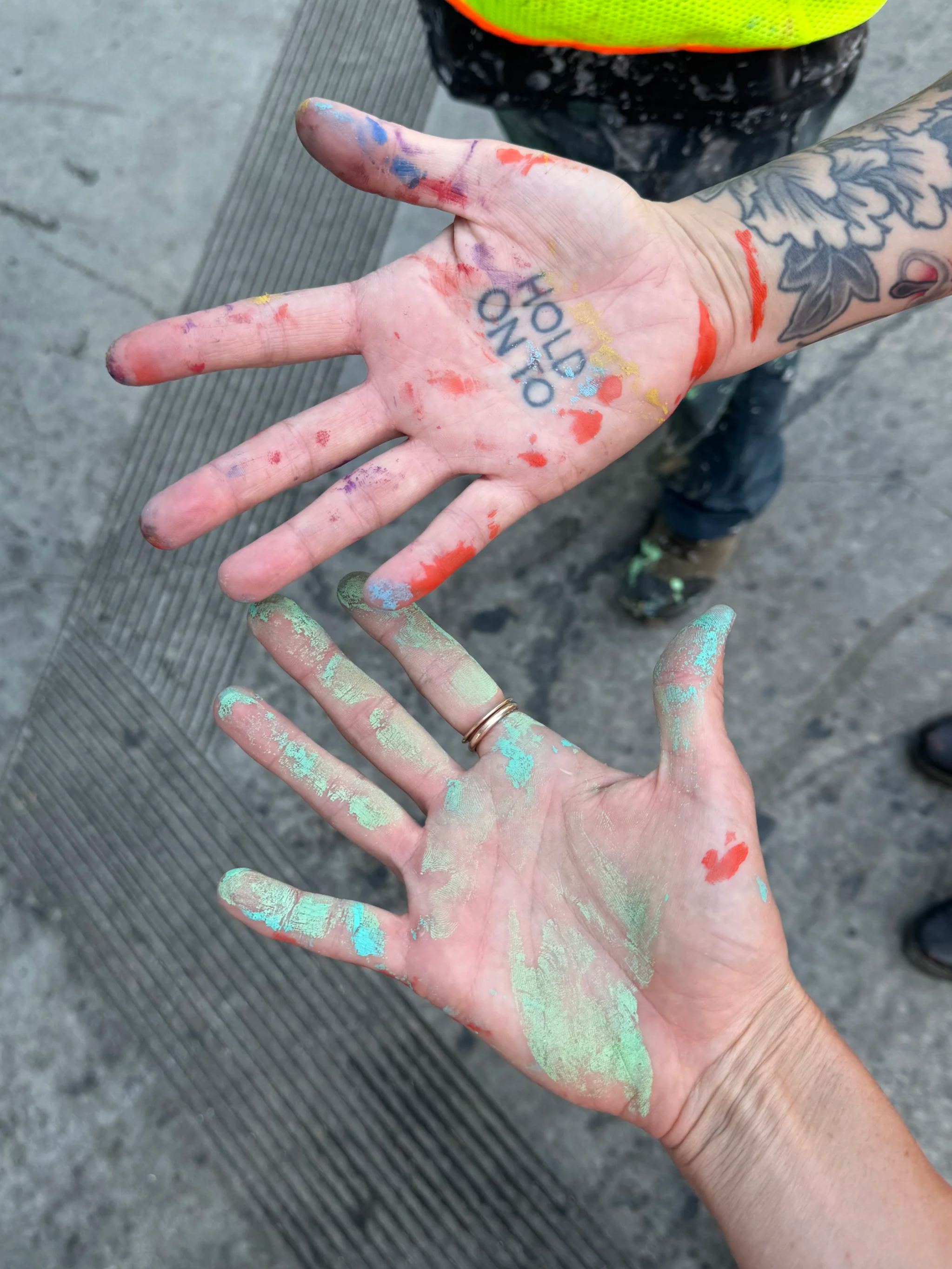
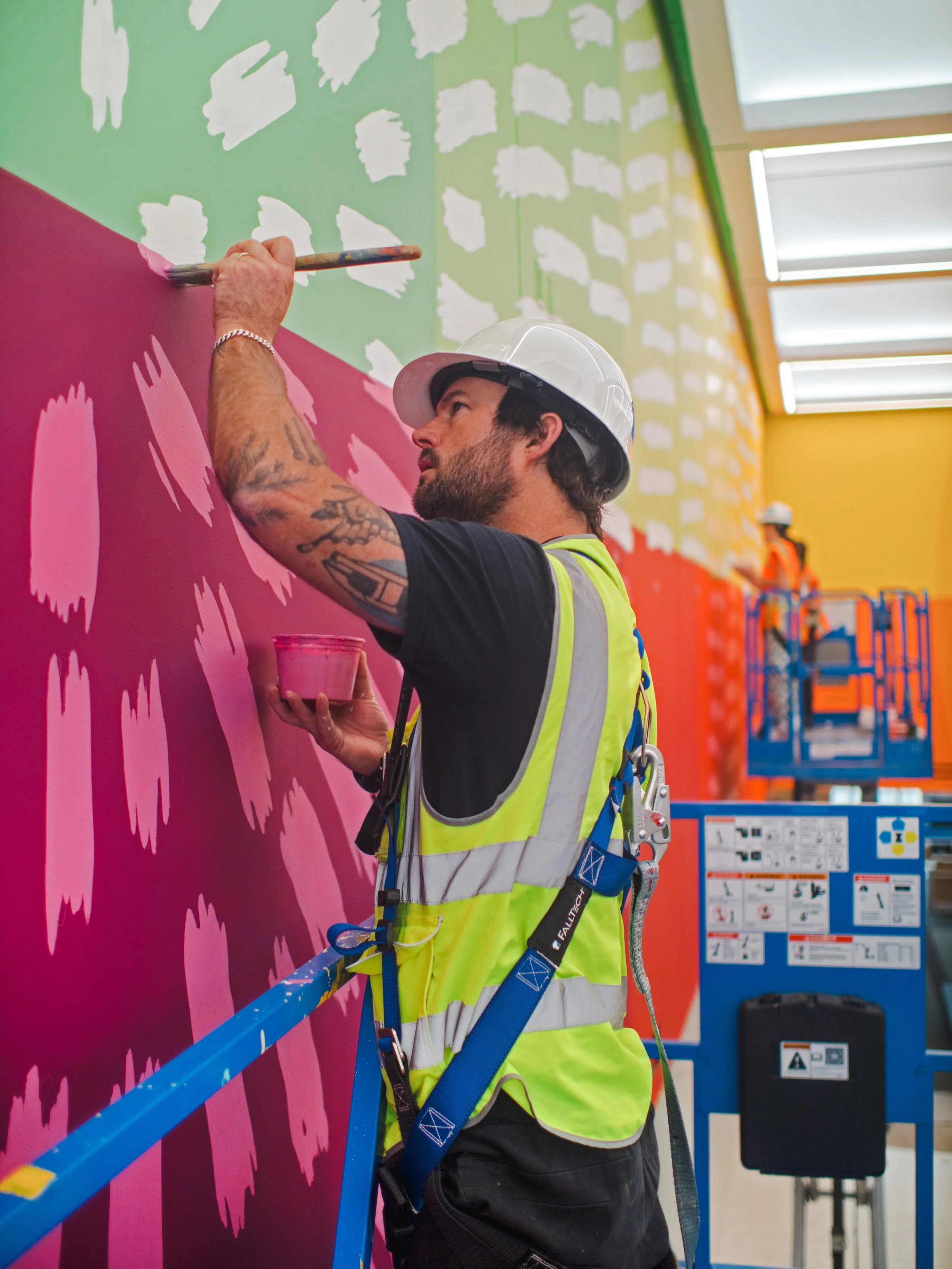
Managing a team of ten painters inside an airport requires clarity and structure. Each day began with specific assignments so every person could start working right away. Commercial painters handled large background fields, and sign painters executed the detailed linework.
One of the biggest lessons was that managing this many people leaves little time for me to paint. My role became directing, organizing, preparing materials, solving problems, reviewing work, and protecting the vision.
Communication was constant. I shared morning briefings, end-of-day recaps, next steps, and as much appreciation as possible. The environment was noisy and intense (including a six-day stretch where an emergency speaker played a monotonous test loop on repeat.) Humor helped us stay grounded, and the shared goal created its own momentum that kept us focused.
Every person showed up with commitment and good energy daily, which made the entire execution phase possible.
The Final Results
The final installation spans three walls and over 60 colors. It shifts from cool tones on the East wall, through a full-spectrum burst on the South wall, into warm tones on the West wall. One massive, continuous gradient with a whole lot of life in it.
This is currently the largest hand-painted mural on display at LAX, and it it is a piece that we are very, very proud of.
In Reflection
This project reinforced how much planning, clarity, and adaptability are woven into our practice. The design, the systems behind it, the collaboration, and the work that happens on site all matter equally. The final installation reflects that collective effort, and we carry the lessons from LAX into every large-scale project we take on.
If you have a large project that you’d like to collaborate on, reach out. We’d love to hear from you.