
Our C-33 License
Why we got a Painting & Decorating Contractor License
The mural world has changed dramatically in the last decade. Public art programs have nearly doubled, commercial developers understand the power of a color drenched wall, and the demand for muralists has surged across social media. Instagram alone holds more than four million posts tagged with “mural artist.” Budgets that once topped out at a few thousand dollars now regularly reach the six figure range.
For an industry growing this quickly, it is surprising how little structure exists behind the scenes. There is no universal training path or certification process, and no shared standard for materials, installation, or safety. Anyone who has painted on a wall can call themselves a muralist, which leads to a wide range in awareness and professionalism.
We’re grateful for the C-33 License, as it is one of the only ways to demonstrate the experience we have built over the last decade.
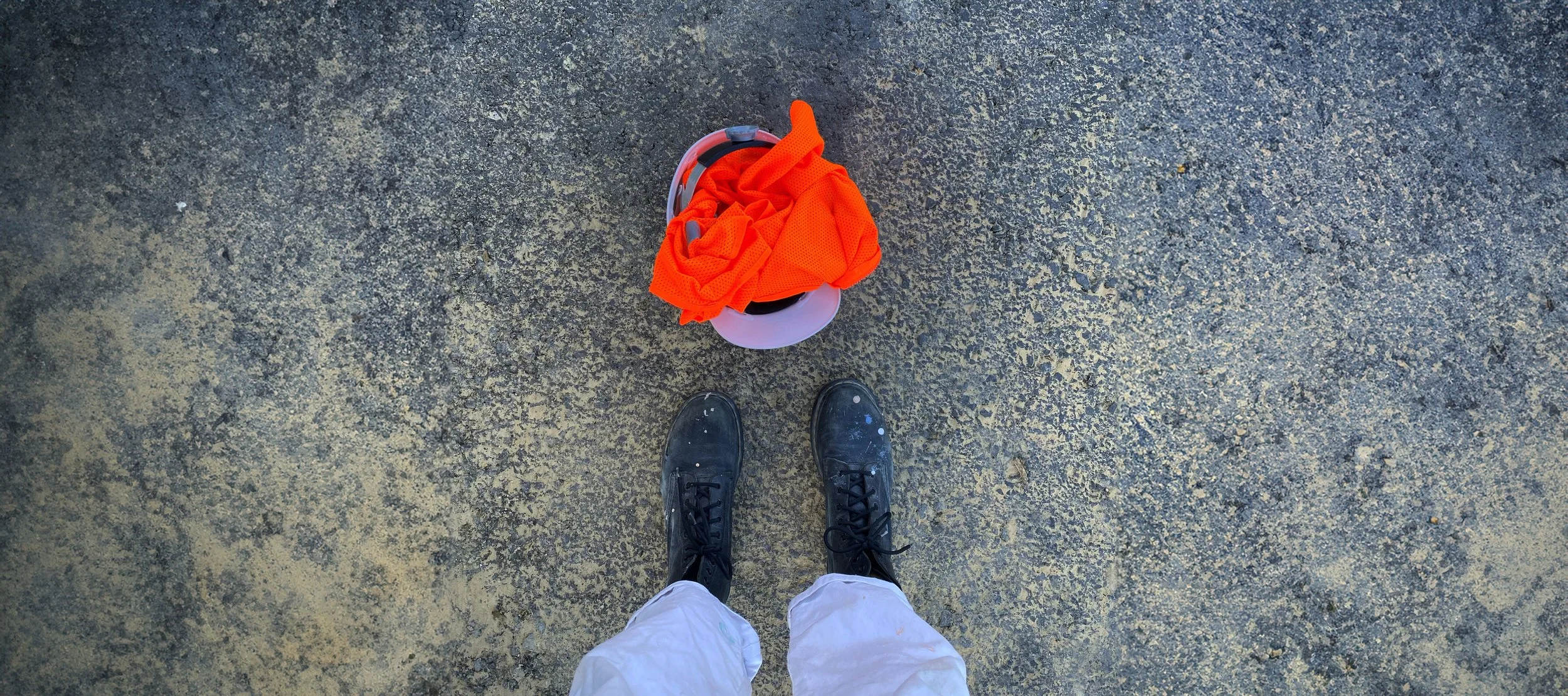
Artist to Muralist to Contractor
For years our founder Allison Kunath operated like most muralists. She got work through her studio practice, word of mouth, and a growing portfolio of murals shared on Instagram. As our projects expanded, we found ourselves regularly asking developer clients for exemptions from requirements like commercial auto policies or licensure. Most were willing because muralists fall into a bit of a gray area on job sites.
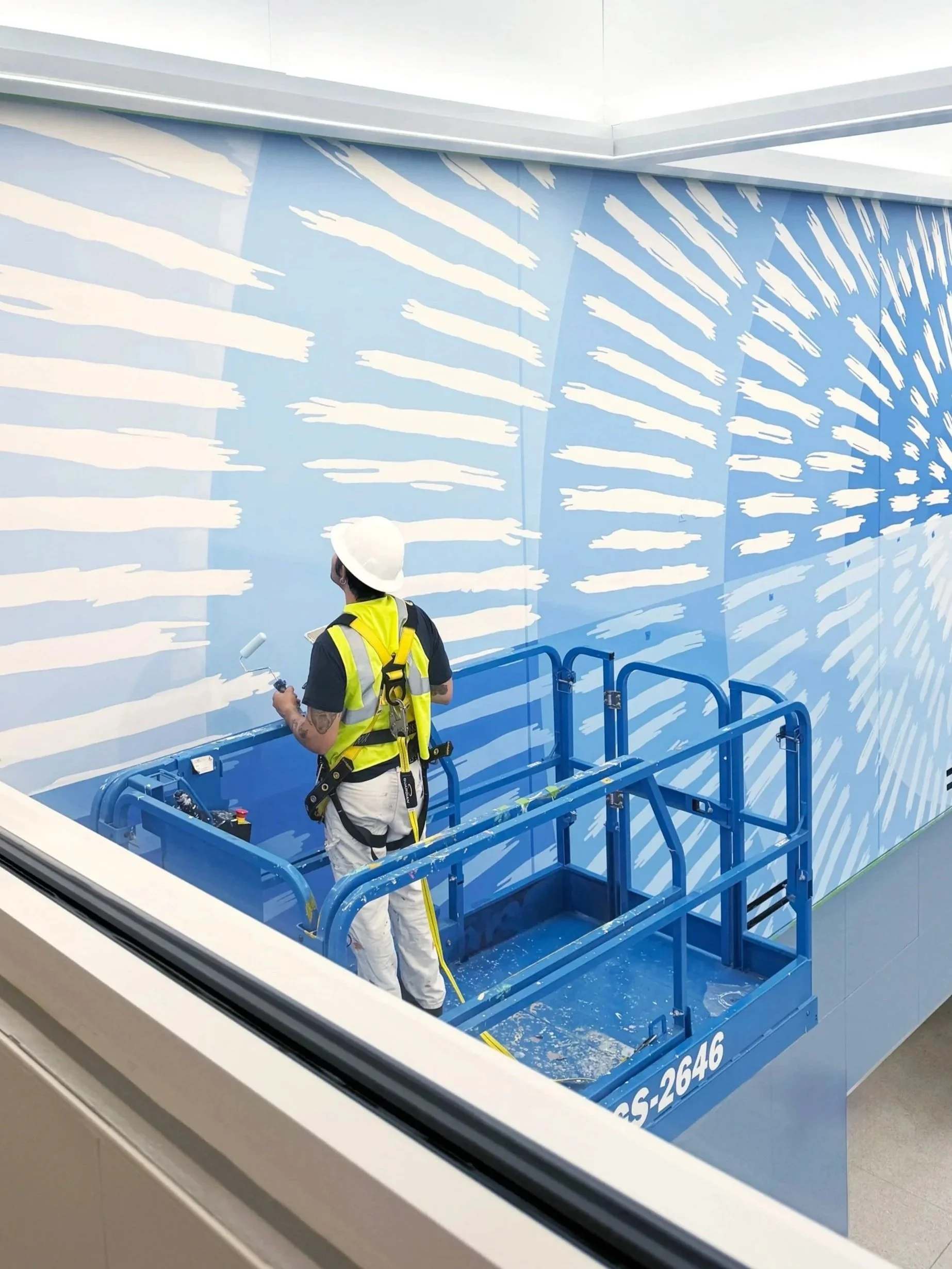
That changed when we were commissioned for our largest public art installation to date, a 3,400 square foot mural inside LAX. The general contractor in charge of executing the renovations inside Terminal 4 required every vendor on site to carry a 5 million dollar liability policy and workers compensation. We were deep in the commission process when we learned that a special exemption wouldn’t be possible this time and that the only way to secure workers compensation was to become a licensed contractor.
At first the requirement felt like a hurdle. But once we started to prepare for the license exam, we started to wonder why we hadn’t taken the step sooner. Our work may appear purely creative on the surface, but the execution lives firmly in the construction world. We use lifts. We work at height. We wear PPE. We coordinate with multiple trades. We install artwork that is expected to last for decades, just like the structures it belongs to.
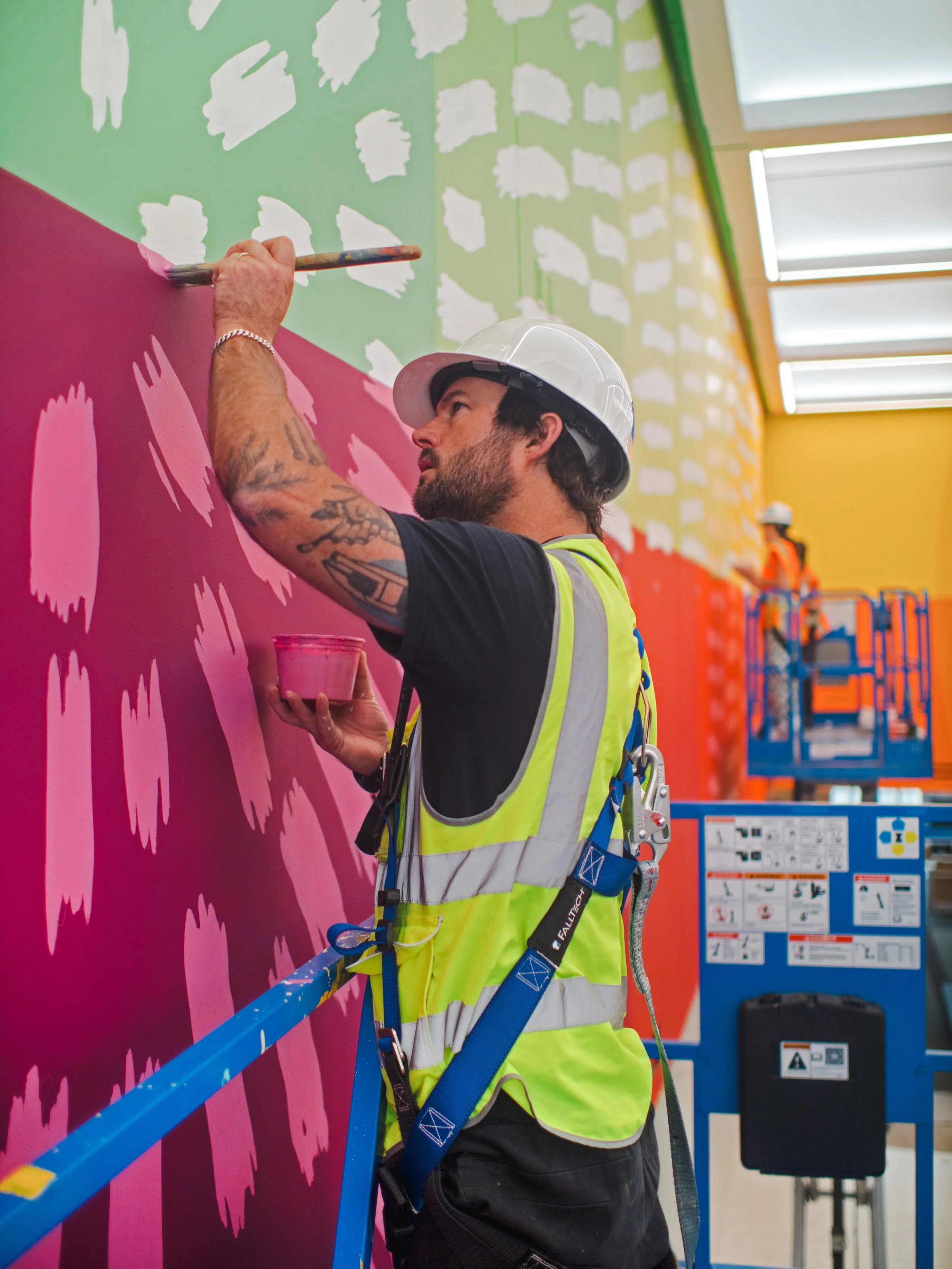

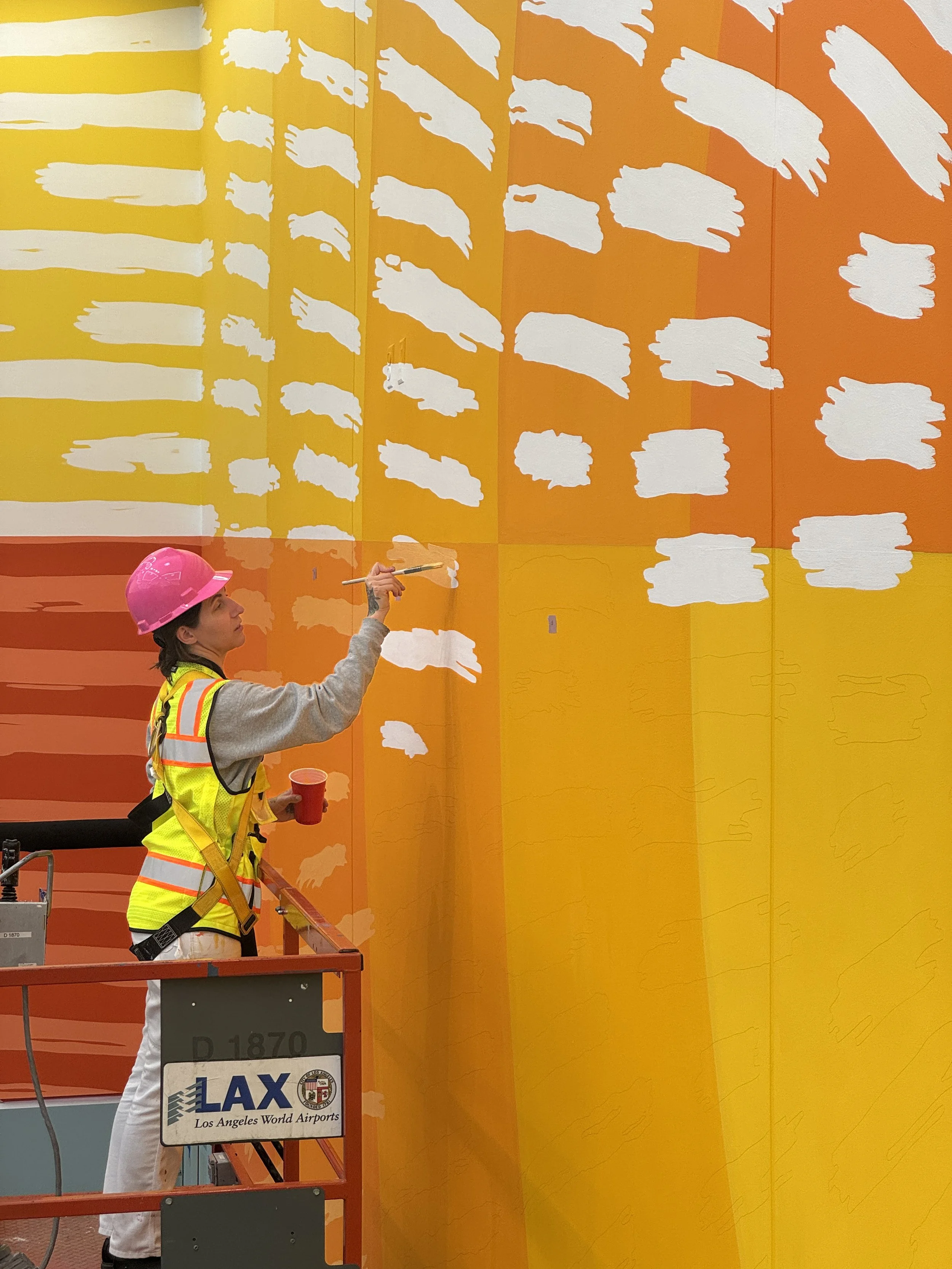
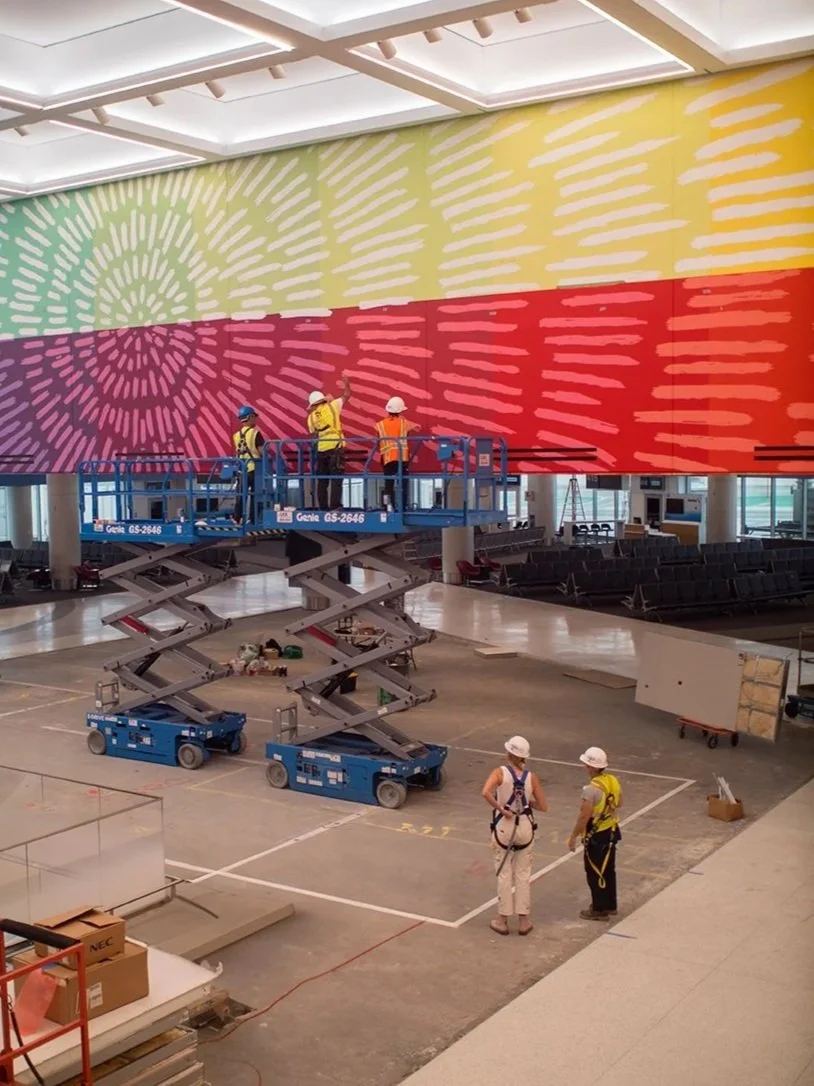
The Truth About The Mural Industry
Because there is no training, certification, or standard entry point into mural work, many artists begin without a working understanding of several essential fundamentals:
material systems & long term adhesion
insurance requirements
labor & workers compensation laws
proper equipment use
job site safety, etiquette & communication
We were fortunate. Our lead assistant of four years was an electrical contractor who grew up in the trades. He took the job site knowledge we had gathered over the years and sharpened it significantly. That mentorship was invaluable and put us in a strong position to pass the licensing exams on the first try.
However, most artists entering the field do not have that background. They are skilled creatively but out of their depth on an active construction site. They may have only a short term general liability policy, and they likely don’t even know that they need workers compensation for their crew. Many have zero construction experience before stepping into a complex commercial project.
We say this - by the way - not in judgement, but 100% based on our own experience. We were like those artists early in our career. We figured things out as we went and were lucky nothing went wrong.
Clients want to assume their artist has all of this handled, but in reality there is no universal process to ensure it. Licensing is one of the only signals that an artist understands the professional side of mural installation thanks to a rigorous state vetting process.
SB 456
Illuminating A Gray Area
In October 2025, SB 456 passed and created a powerful licensing exemption for muralists. This opened more doors for artists who may have been blocked by license requirements in the past. A win by all definitions.
However, it’s important to remember that the labor laws in California have not changed.
In the eyes of the state, any helper or assistant on a mural project is legally considered an employee of the lead artist. This means workers compensation (and therefore a license) is required.
Because of a lack of standardization in our field - many muralists are unintentionally putting themselves and their clients at risk because they do not carry the coverage the law requires.
How Our License Benefits Our Clients
Becoming licensed has strengthened every part of our process. It allows us to:
insure each member of our team properly
operate safely on active job sites
price projects more accurately based on a clear understanding of direct costs, overhead & margins
qualify for large and municipal projects with strict requirements
provide clients with confidence + security thanks to our contractor’s bond
deliver work that meets professional standards in both craft and safety
Clients still hire us because they connect with the art. But our license is the part that ensures that the art is installed responsibly, safely, and with long term durability in mind.
The Future Of The Mural Industry
Our field is booming, and there’s some catching up to do.
Public art programs are expanding. Developers expect a higher level of professionalism. Municipalities are raising their standards. The work itself keeps getting larger and more complex.
Licensing is not the only path forward, but in an unregulated industry it is one of the clearest markers of experience, preparation, and accountability.
This credential supports our creative work, protects our team, and brings more clarity and confidence to the clients who trust us with their spaces.
We are proud to be on a very short list of licensed muralists, and we hope to see others join us here soon.

Like the sound of licensed & bonded?
If you are looking for a licensed muralist to design and install your next project, we’d be honored to contribute.
Schedule a discovery call to start the conversation.